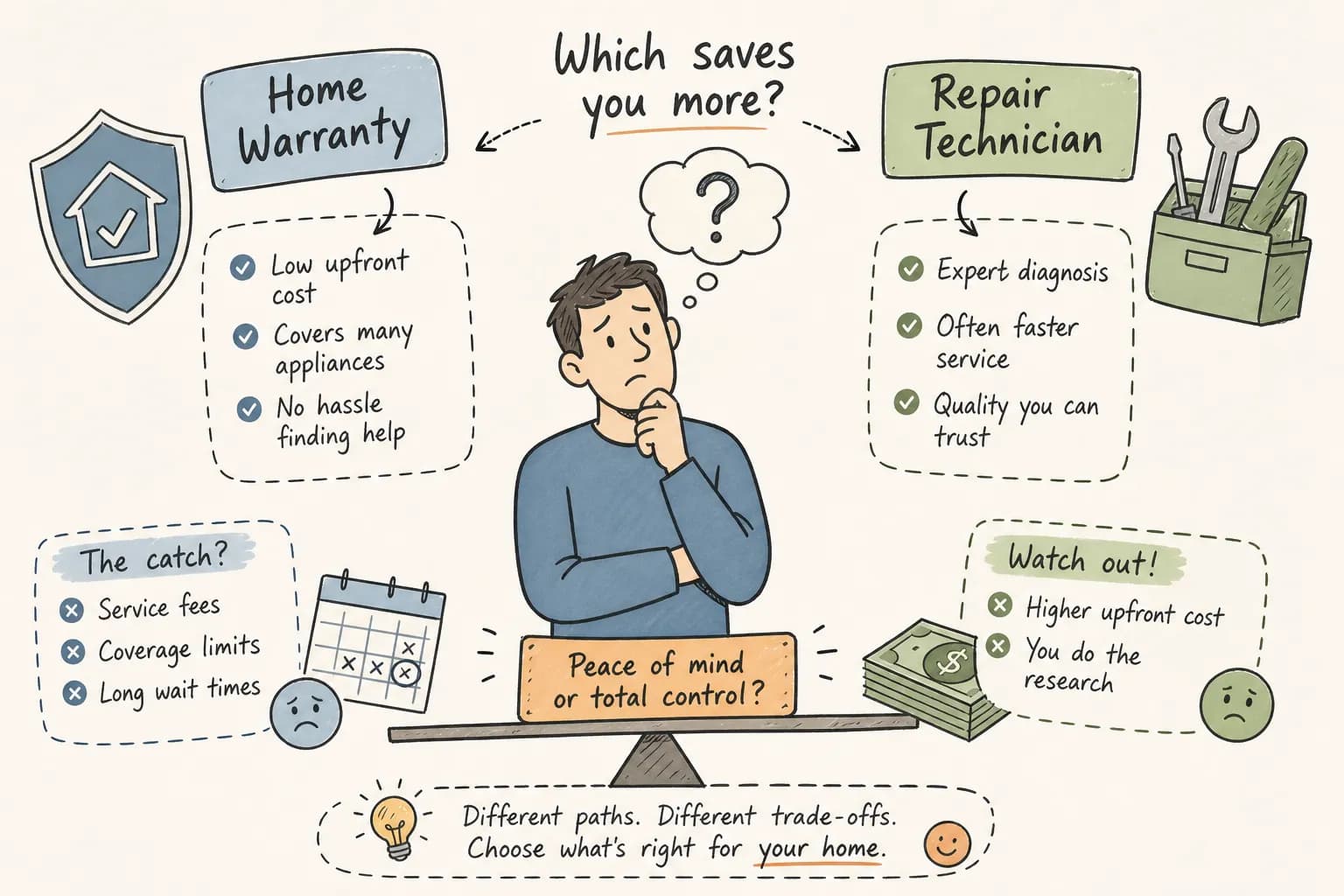
Decide between a home warranty or calling a repair technician with clear pros, costs, and questions to ask - plus when a fixed-price service is better.
It's Sunday morning. The washing machine has stopped mid-cycle, the drum is full of water, and somewhere in a kitchen drawer there's a home service plan you signed up for two years ago. Your neighbour swears by ringing an engineer directly. When it comes to home warranty vs calling a repair technician , the right answer depends on timing, cost, and a close look at the fine print.
The home service plan route is structured and contract-based, but it comes with waiting periods, exclusions, and a service fee you pay whether or not the claim goes anywhere. The independent repair technician route is faster and more direct, but quality varies considerably unless you know what to look for. Both options have genuine merits and real drawbacks, and the right answer depends entirely on your situation.
There is a third route worth knowing about: a certified, fixed-price repair company like Alpha Appliances Ltd, which combines the reliability of a structured service with the speed and transparency of booking direct. No annual premium, no 30-day wait, no excess before anyone picks up a tool. By the end of this article, you'll know exactly which option fits your circumstances, what questions to ask before committing, and what records to keep if things go wrong.
A home service plan is an annual contract that covers specific systems in your home, such as plumbing, heating, or electrics. Providers like HomeServe operate in this space, offering policies that typically cost between £100 and £300 per year, with a call-out fee of £60 to £120 each time you make a claim. These figures are drawn from published provider tariffs and consumer price comparisons, including appliance repair price guides such as the appliance repair cost guides. These plans are not the same as the structural warranties attached to new builds, which run for 10 to 15 years and cover major defects in the fabric of the building. Home service plans for existing properties are narrower in scope, renewed annually, and still charge you every time you need to use them.
The cost structure matters because it's easy to assume you're covered once the direct debit is set up. In practice, you're paying an ongoing premium for access to a claims process, not a guarantee of free repairs. A £200 annual premium plus a £90 call-out fee means you've spent £290 before a single part has been replaced.
Most home service plans include a standard 30-day waiting period between signing up and becoming eligible to make a claim. If your appliance breaks down in week two of a new policy, you're not covered. Contracts are also annual, so a missed renewal window creates a gap in cover that leaves you exposed at the worst possible moment. Many plans charge a service fee even if a claim is declined, which often catches policyholders off guard. You pay for the engineer to attend, and if the fault falls under an exclusion, the repair remains outstanding regardless.
The exclusions in a home service plan contract are where the real surprises hide. Pre-existing conditions are almost universally excluded: if the fault existed before the policy started, the claim will be declined. Faults caused by poor installation, inadequate maintenance, or modifications to the appliance are also excluded in most plans. Cosmetic damage that doesn't affect function, secondary damage caused by the initial fault, and failures linked to weather events, pests, or hazardous materials sit outside the scope of standard cover. Many providers document common queries and exclusions in their frequently asked questions pages, which are worth checking before you call them out.
Plans also typically cap the payout per claim or per contract year. If the repair cost exceeds that cap, you pay the balance. For a complex fault on a high-end appliance, the cap can be reached quickly, leaving you with a significant shortfall even after a successful claim.
When a home service plan claim is rejected: the service fee is charged, the engineer leaves, and the appliance is still broken. You're then in the same position you would have been in had you called an independent technician first, except you're also out the call-out fee and whatever time was lost waiting for the appointment. This isn't an occasional edge case; it's a structural feature of the claims-based model. Many independent technicians, by contrast, provide a clear diagnosis and a written estimate before any work begins, so you know exactly where you stand, always ask for this in writing before giving the go-ahead.
Call-out charges from an independent appliance engineer typically run between £30 and £60, with labour at £40 to £100 per hour. Most common repairs on washing machines, dishwashers, and ovens land in the £80 to £200 range before parts are added. A washing machine repair averages around £125 all-in; a dishwasher repair typically comes to £150 to £200. These ranges reflect current UK market pricing based on published trade guides and consumer comparison data. Run those numbers against a year's service plan premium of £200 plus a call-out fee of £90, and a single repair from a reputable independent technician very often costs less than the plan's running total for that year.
Parts add to the bill when they're needed, a drum bearing replacement, for instance, can add £40 to £80 on top of labour, while a printed circuit board (PCB) on a premium machine may cost considerably more. Even so, for one straightforward repair on a modern machine, the maths rarely favours the service plan.
The distinction between a fixed-price repair model and an open-ended hourly rate is significant. With a fixed-price engineer, the cost is agreed before work starts and doesn't change if the job takes longer than expected. With an hourly-rate tradesperson, a tricky diagnosis or an unforeseen complication adds to the final bill, and you have limited visibility of where the total is heading. For anyone who finds repair costs unpredictable, choosing a certified fixed-price provider removes that risk entirely. The figure on the quote is the figure on the invoice.
A home service plan earns its keep when multiple high-cost faults occur within a single policy year, particularly for older heating or plumbing systems. For a landlord managing several properties with ageing boilers and multiple appliances under one annual contract, the maths can work in the plan's favour. If the annual premium is low relative to the potential repair cost, and particularly if a full boiler service cost or major heating system failure is a realistic risk, keeping the plan active is a rational decision.
For a single appliance fault on a relatively modern machine, the plan rarely wins on cost or speed. If an independent engineer's repair estimate sits below the combined cost of the annual premium and the service fee already paid, booking direct is the faster and cheaper route. A broken washing machine that needs fixing this week cannot wait 30 days for a new policy to activate, and it can't wait several weeks for a warranty-appointed engineer's schedule to clear, delays that, based on industry benchmarks and consumer reports, are far from unusual. On speed, independent technicians with next-day availability are often able to offer considerably faster appointments than plan-based services.
Your rights when a warranty repair falls short
The Consumer Rights Act 2015 gives UK consumers strong statutory protection that sits alongside, and in many cases above, any warranty or service plan. Goods must be of satisfactory quality and fit for purpose. If a repair is substandard or the fault returns, the retailer is obliged to remedy the situation at no cost to you and within a reasonable time. If the first repair or replacement fails within the first six months of the original purchase, the retailer owes a full refund with no deduction for use during that period. Citizens Advice and Which? both publish detailed guidance on how these rights operate in practice and are worth consulting if a dispute arises.
Statutory rights extend up to six years in England and Wales, and five years in Scotland, for faults that can be shown to have existed at the time of purchase. A manufacturer warranty or extended plan cannot reduce these rights; it can only add to them. If you've had a poor repair experience and the fault persists, your first call should be to the retailer, not the manufacturer's helpline.
Always contact the retailer first for Consumer Rights Act claims. Keep your proof of purchase, all warranty correspondence, and a written record of any repair that fails or is not completed to the standard agreed. A reputable independent engineer will provide a service report after every visit: this document is useful evidence if a dispute arises later. If you're a landlord, a dated service report also provides the compliance documentation your tenants and letting agents may require. Don't rely on memory or verbal confirmation; written records are what count if the situation escalates.
Not all independent engineers carry the same credentials, and the difference matters when a repair goes wrong or a fault reoccurs. Look for City & Guilds certification as a quality baseline, Gas Safe registration for any gas appliances (as required by law, see the Gas Safe Register for guidance), and a published fixed-price model with no hidden call-out fees. Genuine manufacturer-sourced parts are important for premium appliances where off-brand components can void remaining cover. A strong first-time fix rate and a verifiable track record of customer satisfaction are the clearest signals that the engineer won't be returning for the same fault twice. For practical queries about our processes and standards, see the FAQ.
Alpha Appliances Ltd is built around exactly this model. Prices are confirmed before work begins, so there are no surprises on the invoice. Engineers hold City & Guilds certification and Gas Safe registration, and carry manufacturer training across all major brands including Miele, Bosch, AEG, and Samsung. The company reports a 78% first-time fix rate, meaning the job gets done in a single visit in the vast majority of cases. Next-day appointments are available across London, Berkshire, Surrey, Hampshire, and Dorset, so you're not waiting weeks for a claims queue to clear.
No premium, no waiting period, no excess, booking takes four steps online and appointment confirmation comes through promptly. For homeowners and landlords across the South of England, particularly those with premium appliances, that's a straightforward, accountable service with no fine print to navigate, check our terms and conditions for full details.
If you already hold a home service plan, check what it excludes before filing a claim. Calculate whether the premium plus service fee has been or will be recovered within the year, and know your Consumer Rights Act position if the repair is substandard. If the plan won't cover the fault or the wait time is unacceptable, home warranty vs calling a repair technician is no longer a theoretical comparison, booking an independent engineer directly is a legitimate and often cheaper alternative.
If you don't hold a plan, the figures set out above point in one direction: for most single-appliance faults on a modern machine, a certified independent technician with a fixed-price model is faster, cheaper, and considerably less stressful. The difference between a frustrating repair experience and a smooth one usually comes down to who you call first.
Alpha Appliances Ltd serves homeowners and landlords across London and the South of England with fixed-price repairs and no long-term contracts. Check availability and book online today, the repair can be arranged sooner than you think.
Book a visit from a certified Alpha engineer in minutes.
TRUSTED BY HOMEOWNERS
Fast, reliable, and warranty-backed repairs for every major brand.
Discover more tips from Alpha engineers.