
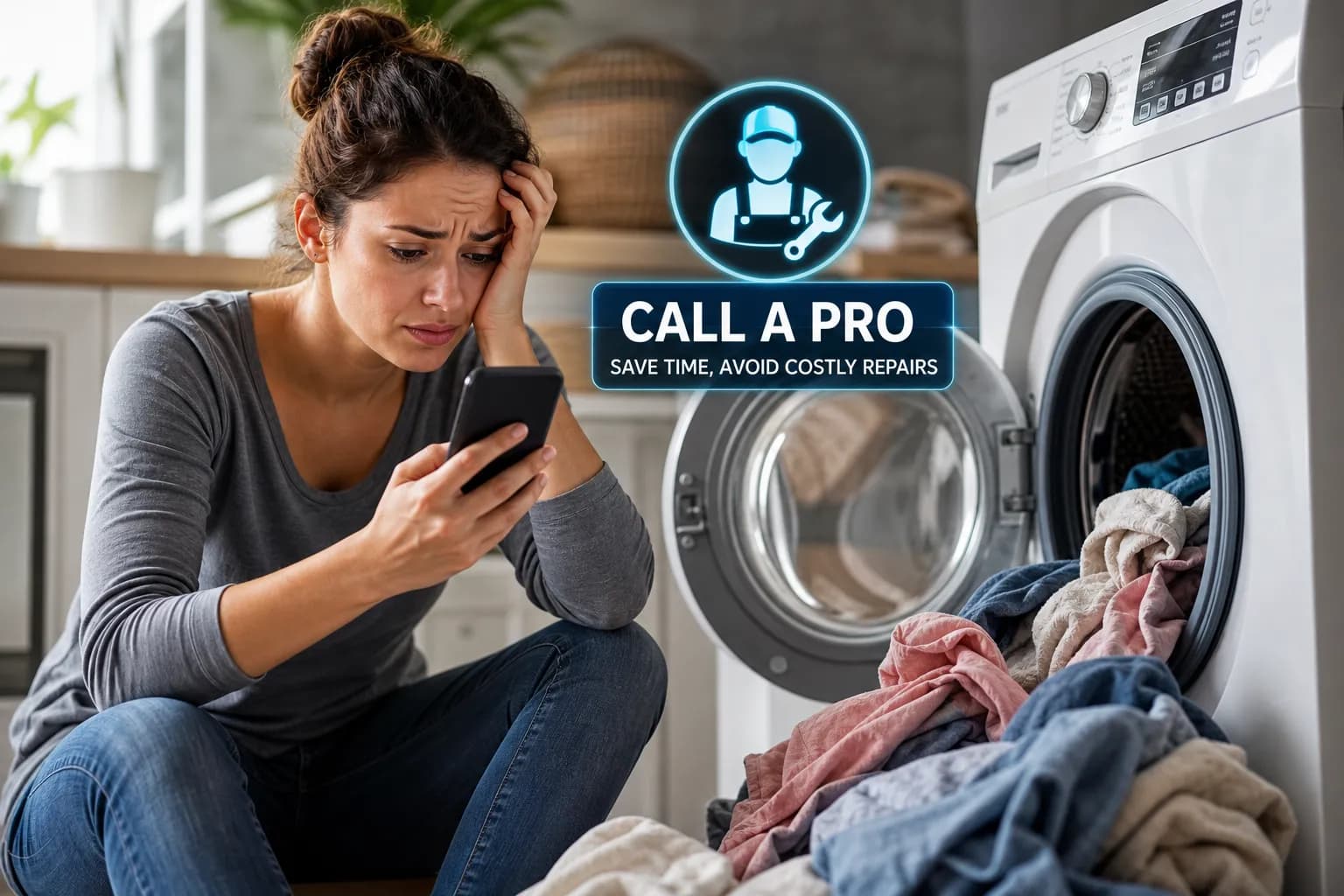
When to Call a Pro for Laundry Machine Repair
It's Sunday evening. You've opened the washing machine door to find a drum full of cold, murky water that hasn't drained. The cycle finished an hour ago, your work shirts are soaked through, and you've got no idea where to start. If you're facing a laundry machine repair decision, whether to attempt a home check or call a professional, most faults follow a recognisable pattern, and once you know the pattern, the right course of action becomes obvious.
This guide covers the most common washing machine and tumble dryer faults, what you can safely check yourself in a short amount of time, and exactly where the line sits between a quick home fix and a call to a certified appliance engineer. Use it as a practical decision-making tool. By the end, you'll know whether your fault is a minor filter clean or a more substantial repair, and you'll know how to get either sorted without wasting time or money.
What your laundry machine is actually trying to tell you
Most faults have a clear pattern, and recognising the symptom correctly is genuinely half the battle. Jumping to conclusions, for example, assuming a drainage problem means a failed pump, is how straightforward fixes become expensive ones. Start with the symptom, work through the likely causes in order of probability, and the fault usually narrows itself down fast.
Drainage problems and water left in the drum
Standing water after a completed cycle almost always points to one of three things: a blocked pump filter, a kinked drain hose, or a failed drain pump. The sound the machine makes during the drain cycle tells you a lot. A humming pump with no movement strongly suggests a blockage rather than a component failure; silence during the drain phase may indicate the pump itself has gone, or that there's an electrical fault in the pump circuit. A blocked filter is by far the most common cause and, importantly, the most accessible fix for a homeowner.
Drum won't spin, bangs during cycles, or vibrates across the floor
Before assuming the worst, check whether the transport bolts were removed when the machine was installed. They're a surprisingly common culprit, particularly on machines that have been moved recently. Beyond that, the distinction to make is between the irregular thump of an unbalanced load, which stops when you redistribute the laundry, and a deep, resonant rumble that changes pitch as drum speed increases. That second sound is a reliable early sign of bearing wear. It won't resolve itself, and it will get worse with every cycle until the machine becomes unusable.
Leaks, error codes, and tumble dryers that won't heat
Most modern washing machines and tumble dryers display fault codes that identify the affected system or symptom; check your model's manual because the code does not always point to a single failed part. A Bosch E18 or F18 points to a drainage fault; a Samsung 5E means the same thing; a Hotpoint F05 is also drainage-related. Before assuming a code means expensive component failure, photograph it and check it against your model's manual, which is available online for almost every machine currently in circulation. Common leak sources for a washing machine leak repair include the door seal, the inlet hose, and the area around the drum filter. A tumble dryer that runs but produces no heat is commonly caused by a failed heating element or a faulty thermostat, both are typical suspects, though an engineer may need to carry out electrical tests or remove panels to confirm the exact fault.
Laundry machine repair: safe checks before you call a pro
There's a short list of checks any homeowner can run safely, without tools or technical knowledge, that resolves a surprising number of faults. These aren't a full repair guide; they're the checks that save you an unnecessary call-out fee and give you confidence that the fault is real before you book an engineer.
Power supply, door latch, and load balance
Start at the wall. Test the socket with another appliance, check that a breaker hasn't tripped at the consumer unit, and make sure the plug is fully seated. Then check the door: most modern machines won't start or spin unless the door clicks fully closed and the interlock engages. Check whether child lock is active, since this is one of the most common causes of machines that appear completely unresponsive. Finally, redistribute an uneven load and run the spin cycle again before drawing any conclusions about the motor or drum.
Cleaning the pump filter and checking hose connections
The pump filter sits behind a small access flap at the bottom front of most front-loading machines. Before opening it, cancel the cycle, unplug the machine, and place a shallow tray and towels underneath the flap because water will come out. Drain the machine slowly by loosening the filter cap a fraction at a time, letting the water flow into the tray, and repeating until the drum is empty. Remove the filter, clear out any lint, coins, or debris, rinse it under warm water, and refit it firmly. A clogged filter causes drainage failure, foul smells, and spin problems simultaneously, so it's always worth ruling out before anything else. While you're at the back of the machine, visually check both hoses for kinks, loose connections, or visible cracking.
Reading the error code and cross-referencing the manual
Photograph the code on your phone, then search for your exact model number alongside the code. The manufacturer's manual lists each code with the most likely cause and a recommended first response, and these documents are free to download for almost every appliance currently in use. Knowing what the code actually means, rather than guessing, puts you in a much stronger position before you speak to any engineer, and can help you decide whether a washer fault diagnosis requires professional tools or a simpler fix.
Faults that need a certified engineer: when to book laundry machine repair
This is the point where DIY checks end and professional diagnosis begins. Knowing where that line sits isn't about lack of confidence; it's about protecting yourself, your appliance, and your home from faults that carry genuine risk or require specialist tools to resolve safely.
Bearing, motor, and control board failures
These three components sit at the top of the repair complexity scale. Replacing drum bearings requires the entire drum to be dismantled, which takes a qualified engineer two to three hours under normal circumstances and longer on integrated or sealed-drum machines. Motor and control board faults require specialist diagnostic equipment and, in most cases, manufacturer-specific parts. Attempting these repairs without the right training and tools almost always causes additional damage that increases the final bill significantly.
Burning smells, repeated circuit trips, and exposed wiring
Unplug the machine immediately and keep it unplugged at the wall, do not run it again. A burning smell, a breaker that keeps tripping, or any sign of exposed or scorched wiring indicates an electrical fault that creates a genuine safety risk. This is not a situation for a filter clean or a hose check. The machine needs to remain disconnected until a certified engineer has inspected it.
Persistent leaks that don't clear with basic checks
If a leak continues after you've tightened the hoses and cleaned the filter, the source is likely internal: a failed pump seal, a cracked drum, or a torn door gasket that needs hands-on inspection to locate and replace. Getting the diagnosis right on the first visit saves significantly on both time and cost. When a qualified engineer carries common parts on the van, they can typically diagnose and resolve an internal leak in a single visit, resolving most internal leaks without leaving the machine unusable for days while parts are sourced.
What laundry appliance repairs typically cost in the UK in 2026
Understanding the likely cost before a quote lands removes a lot of anxiety from the repair process. These figures reflect current 2026 pricing across the UK, including parts and labour, with London and the South East typically sitting £20 to £50 above the national baseline.
For washing machine repair, expect to pay roughly:
- Pump replacement: £80, £150
- Door seal replacement: £78, £120
- Belt replacement: £70, £130
- Bearing replacement: £150, £280 (up to £400 on integrated or sealed-drum models)
- Motor replacement: £220, £400
- Control board replacement: £150, £290
For tumble dryer repair, typical costs run from £60 to £190 for a heating element, £40 to £110 for a thermostat, £60 to £150 for a belt, and £120 to £300 for a motor. Call-out fees generally range from £40 to £120 and are frequently deducted from the total if the repair proceeds. Emergency, evening, or weekend visits add a further £100 to £200 to the standard rate.
When repair makes more financial sense than replacement
The practical rule of thumb is this: if the total repair cost is under £150 and the machine is under five years old, repair almost always wins. For machines aged five to eight years, compare major repairs, such as bearings, motor, or control board, carefully against the 50% threshold: if the quote exceeds roughly half the cost of a comparable replacement, replacement deserves serious consideration. For machines over ten years old, only straightforward repairs under about £100 tend to make financial sense; anything structural on an older machine is usually better put toward a new appliance.
How to find an appliance repair service you can actually trust
No general licence is required to repair domestic electrical appliances in the UK, which means the sector has no single regulatory body filtering out unqualified operators. That makes the vetting process more important, not less, and there are specific things worth checking before you book.
Qualifications and certifications worth verifying
Ask for evidence of a City & Guilds Level 2 or Level 3 qualification in domestic appliance servicing and repair, and request the specific qualification title and number rather than accepting a general claim of being "fully qualified." Institute of White Goods Engineers (IWGE) membership is a useful specialist indicator because it's specific to this sector. For premium brands such as Miele, Bosch, or AEG, ask whether the engineer is manufacturer-trained or authorised. Public liability insurance is non-negotiable; a professional business confirms this without hesitation. Trading Standards Buy with Confidence approval is also worth looking for, as it indicates the business has been independently assessed against consumer-protection standards.
Questions to ask before you book
Four questions cut through most of the uncertainty before a single engineer arrives at your door. First: is the call-out fee deducted from the total if you proceed with the repair? Second: does the engineer carry common parts on the van? Third: will you receive a written quote before any work starts? Fourth: is there a repair guarantee on parts and labour? A reputable service answers all four clearly and without hesitation. Vague or evasive answers to any of these are a reliable warning sign.
Why fixed pricing and next-day availability matter more than you'd think
The two most common complaints about appliance repair services in the UK are hidden fees and extended waits. Vague pricing leads to inflated final bills; week-long booking queues leave households without an essential appliance for far too long. Alpha Appliances operates on a fully transparent fixed-price model with no call-out surprises, carries common parts on every van, and offers next-day availability across Greater London, Berkshire, Surrey, Hampshire, and Dorset. With City & Guilds certified engineers and a clear, consistent service offering, the aim is to remove both of the most common risks in the repair process in a single booking. To book, get in touch with the Alpha Appliances team online or by phone and have your appliance brand, model number, and fault description ready.
Getting the repair right first time
Most laundry machine repair jobs follow a predictable pattern, and the difference between a minor filter clean and a substantial bearing replacement is often simply knowing where to look first. Run the basic checks: test the power supply, confirm the door is latching, check the error code, redistribute the load, and clean the pump filter. Those steps alone resolve a significant proportion of faults that would otherwise generate an unnecessary call-out.
If the fault points to bearings, a burning smell, electrical trips, or a persistent internal leak, stop there and book a qualified engineer. Attempting those repairs without the right training and tools costs more in the long run. A certified laundry machine repair service with transparent pricing, manufacturer-trained engineers, and genuine next-day availability makes getting the job done properly straightforward.
Alpha Appliances has been serving customers across London and the South of England for well over a decade, and booking is straightforward online or by phone. If your machine is telling you something you can't resolve with the checks above, get in touch with the team and let a certified engineer carry out the correct diagnosis first time.
Need a repair today?
Book a visit from a certified Alpha engineer in minutes.