
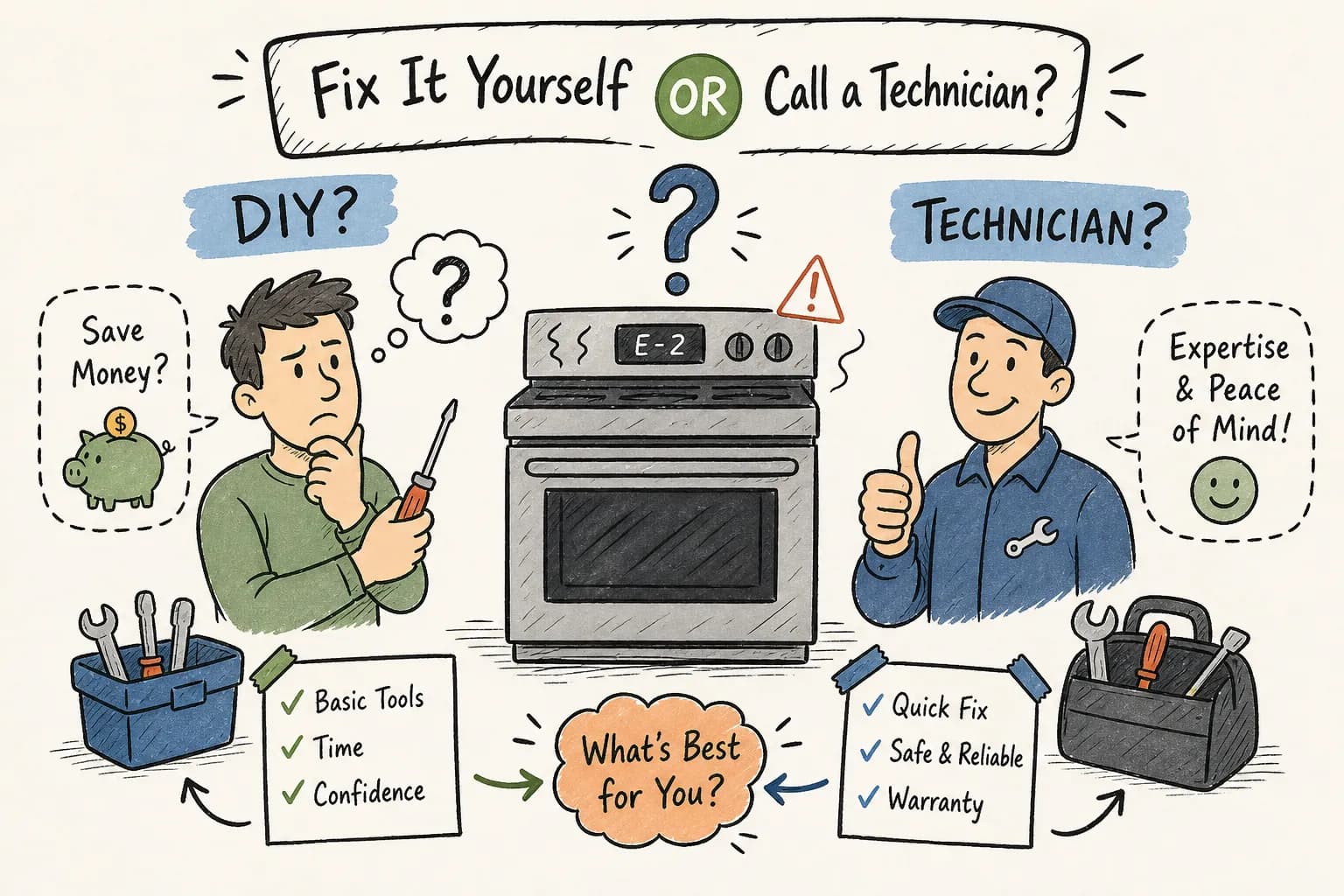
Oven Repairs: Fix It Yourself or Call a Technician?
Few household faults are as immediately disruptive as a broken oven. You've got food to prepare, the clock is against you, and the appliance is sitting there completely cold with no obvious explanation. Most oven faults follow a predictable pattern, and knowing what you're dealing with makes all the difference. Understand the fault, understand what it costs, and you can make a confident decision rather than a panicked one. This guide walks you through the most common problems, what you can safely check yourself, realistic UK pricing, and the qualifications you should demand before letting any engineer touch your cooker.
Reputable domestic appliance repair services today offer fixed pricing, next-day attendance, and transparent diagnostics, a far cry from the ambiguous quotes and open-ended wait times that once made calling an engineer feel like a gamble. The right diagnosis always comes before any decision to repair or replace, and that principle runs through everything below.
What's most likely wrong with your oven
Before you call anyone, it helps to have a reasonable idea of what you're dealing with. Most oven faults fall into a small number of categories, and the symptoms usually point clearly toward one of them.
When the oven won't heat at all
The two most common culprits are a failed heating element and a tripped circuit breaker at the consumer unit. A useful clue: if the oven fan and interior light are both working normally but there's no heat whatsoever, that's a strong indicator of an element failure rather than a wiring or power supply problem. Electric oven repairs for element failure are among the most straightforward jobs a qualified engineer carries out, and parts availability for heating elements is generally good, meaning many faults of this type are resolved on the first visit.
Thermostat and temperature sensor faults
If your oven is technically working but consistently producing overcooked, undercooked, or uneven results, the issue is likely with the thermostat or the NTC temperature sensor. These are distinct components that are diagnosed differently, though both affect temperature accuracy. A simple oven thermometer placed in the centre of the cavity is a practical first check: allow the oven to stabilise at a set temperature, then compare the reading. A persistent gap in the same direction, rather than minor fluctuation, suggests a sensor or thermostat fault rather than normal variation. If the discrepancy is consistent and significant, it's worth booking a diagnostic visit rather than continuing to cook around it.
Broken door seals and why they cause more than draughts
A damaged door gasket is a fault that many homeowners miss entirely because the oven technically still produces heat. What they don't realise is that a cracked, hardened, or poorly seated seal allows heat to escape continuously, leading to inaccurate cooking temperatures, longer heat-up times, and higher energy bills. Run your hand around the door perimeter while the oven is on; any warmth escaping from the seal tells you it needs replacing. It's a relatively low-cost repair that makes a significant practical difference.
Safe checks before oven repairs: what you can do yourself
There are a handful of checks any homeowner can carry out safely before picking up the phone. These won't fix the problem, but they'll help you describe it accurately, rule out trivially simple causes, and potentially save you a call-out fee in the process.
What any homeowner can check safely
Start at the consumer unit. A tripped MCB or RCBO is one of the most common causes of an oven that appears completely dead, and resetting it costs nothing. Check the cooker isolator switch on the wall near the appliance while you're at it. Next, confirm the oven clock is set correctly and that the appliance isn't stuck in auto-programme or child-lock mode: this is a surprisingly frequent cause of an oven that won't respond to any controls at all. Consult your manual if you're unsure how to check or clear these settings.
Once you've confirmed the basics, test each cooking mode separately: bottom heat, grill, and fan-assisted. The results help narrow the fault significantly. Also inspect the door seal visually all the way around the perimeter, looking for tears, cracks, or sections that have hardened and pulled away from the frame.
When to stop and call a professional
If the oven trips the electrics repeatedly when you reset it, shows visible damage to internal wiring or elements, or produces a burning smell, isolate it at the consumer unit and leave it off. Don't keep resetting a tripped breaker: repeated tripping is the circuit's way of telling you something is seriously wrong. For a gas oven, the rule is absolute: if you smell gas at any point, stop immediately, ventilate the room, and contact a Gas Safe registered engineer. There are no safe DIY options where gas is involved. The boundary here is clear: these checks are for diagnosis only. Opening internal components without the right qualifications creates genuine risk.
What oven repairs typically cost in the UK
One of the biggest sources of anxiety around oven repairs is not knowing whether a quote is reasonable. The figures below are based on our engineers' job records across London and the South of England, and are consistent with wider UK market rates for 2026, so you can evaluate any estimate with confidence.
Typical prices by fault type
For a standard weekday repair including call-out and labour, expect to pay in the following ranges:
- Heating element replacement: £80, £170, or up to £300 for built-in ovens, London locations, or premium brands
- Thermostat or temperature sensor: £75, £200 depending on the model and part availability
- Fan motor: £80, £200, with OEM parts for high-end brands sitting at the upper end
- Door seal replacement: typically the lower end of the repair range, making it one of the most cost-effective fixes available
Brand, oven type, and region all affect the final figure. London and the South East consistently sit toward the higher end of these ranges, which is worth factoring in when comparing quotes.
Call-out fees: what to confirm before you agree to anything
A standard weekday call-out or diagnostic fee typically runs between £90 and £110. Weekend or emergency attendance often costs £150, £200 before parts are added. Many reputable services deduct the call-out fee from the total if you proceed with the repair, this is common practice, but always confirm it before booking. Ask for a written quote that clearly specifies whether VAT, labour, parts, and any workmanship warranty are included. A quote that doesn't distinguish between these is a red flag, not a bargain.
The qualifications you should demand from any oven engineer
Getting a reputable engineer through the door matters more than most homeowners realise. The right qualifications aren't a formality; they're a legal requirement for gas work and a practical safeguard for electrical repairs.
Gas ovens: Gas Safe registration is the legal minimum
Any engineer working on a gas oven or cooker in the UK must be Gas Safe registered by law. Not affiliated with someone who is registered, and not previously registered, currently registered themselves. Before work begins, ask to see the engineer's Gas Safe ID card and verify their seven-digit licence number on the Gas Safe Register. Crucially, check the back of the card: it must list "Cooker" or "Range Cookers" as a permitted appliance category. A Gas Safe registration that only covers boilers or central heating does not authorise work on your oven. If in doubt, you can call Gas Safe Register directly on 0800 408 5500 to confirm.
Electric ovens: credentials that still matter
Gas Safe registration isn't required for electric oven repairs, but that doesn't mean any qualifications will do. For any work involving fixed wiring, look for registration with a government-approved competent-person scheme such as NICEIC or NAPIT (or SELECT in Scotland). For appliance-level repairs, ask specifically about City & Guilds certification and whether the engineer is manufacturer-trained for the brand in question. This is particularly relevant if you own a Miele, Bosch, AEG, or Samsung appliance: a manufacturer-trained technician will carry genuine parts and understand the specific quirks of your model in ways a generalist may not.
How quickly can you get your oven repaired?
Wait times vary considerably by region, and knowing what's realistic helps you plan around the disruption rather than being caught off guard by a week-long wait.
Typical wait times across the UK
In London and the South East, same-day attendance is common when you book before midday, with many services arriving within two to four hours. Next-day slots are widely available even for non-urgent faults. Across the South of England more broadly, same or next working day is the norm for most locations, though routine bookings with generalist providers may take three to seven days. In the Midlands and North, next-day is the more reliable expectation, with same-day coverage less consistent outside major cities. National warranty providers typically quote 48, 72 hours as a minimum, which matters considerably when the household depends on the oven every day. If you're searching for oven repair near me, filtering by certified local engineers rather than national warranty schemes will usually get you attended to sooner.
Fixed-price services with next-day availability
For most homeowners, the fastest and most transparent option is a local certified repair service operating on a fixed-price model. There are no surprises on the day, no ambiguous quotes to negotiate, and no separate invoice arriving after the engineer has left. Alpha Appliances Ltd offers fixed-price cooker and oven repairs with next-day availability across London and the South of England. Every repair is carried out by City & Guilds certified engineers, and a straightforward online booking process means you can arrange a confirmed visit without the back-and-forth that often comes with independent local engineers.
Repair or replace: oven repairs vs replacement
This is the question most homeowners end up asking. Here's how to work through it properly.
The 50% rule and how to apply it
The standard benchmark in domestic appliance repair is straightforward: if the total repair cost reaches 50% or more of the price of a comparable new oven, replacement is usually the smarter financial decision. Run the numbers with realistic UK figures. A £140 repair on a £600 oven is clearly worth doing. A £350 repair on that same oven, when a like-for-like replacement costs £550, £600, warrants serious consideration of replacement instead. Make sure your repair total includes the call-out fee, labour, parts, and any installation cost, not just the component price, which is only part of the picture.
Age thresholds that change the calculation
Domestic ovens typically last 10, 15 years. Under 8, 10 years old, repair is almost always the better option for a moderate fault: the appliance has plenty of useful life remaining and replacement parts are readily available. Between 10, 12 years, weigh the repair cost carefully against the oven's reliability history and whether parts for that specific model are still in supply. Over 15 years, a major repair, particularly to a control board, multiple components simultaneously, or a gas ignition system, generally tips the balance toward replacement. Repeated faults within a short period are a stronger signal than age alone: an oven that has needed two or three repairs in 18 months is telling you something about its remaining reliability, regardless of how old it is.
Make a decision based on a proper diagnosis
Many common oven faults are fixable, and a qualified engineer can often resolve the problem in a single visit. The right outcome depends on getting an accurate diagnosis rather than guessing based on symptoms alone. For gas ovens, Gas Safe registration covering the "Cooker" category is non-negotiable. For electric ovens, look for City & Guilds certified, manufacturer-trained engineers who carry genuine spare parts and can back their work with a warranty. Whether you need straightforward electric oven repairs or a more involved fault investigation, the starting point is always a proper assessment.
If you're in London or anywhere across the South of England, Alpha Appliances Ltd is ready to help with domestic appliance repair that's fully certified, fixed in price, and available next day, so a broken oven doesn't disrupt your week any longer than necessary. Every visit includes a documented service report, giving you a clear record of the work carried out.
For honest, fixed-price oven repairs with a documented diagnostic report, get in touch with our team to book a visit. You'll receive a confirmed quote before any work begins, so you can make an informed decision with no pressure and no surprises.
Need a repair today?
Book a visit from a certified Alpha engineer in minutes.