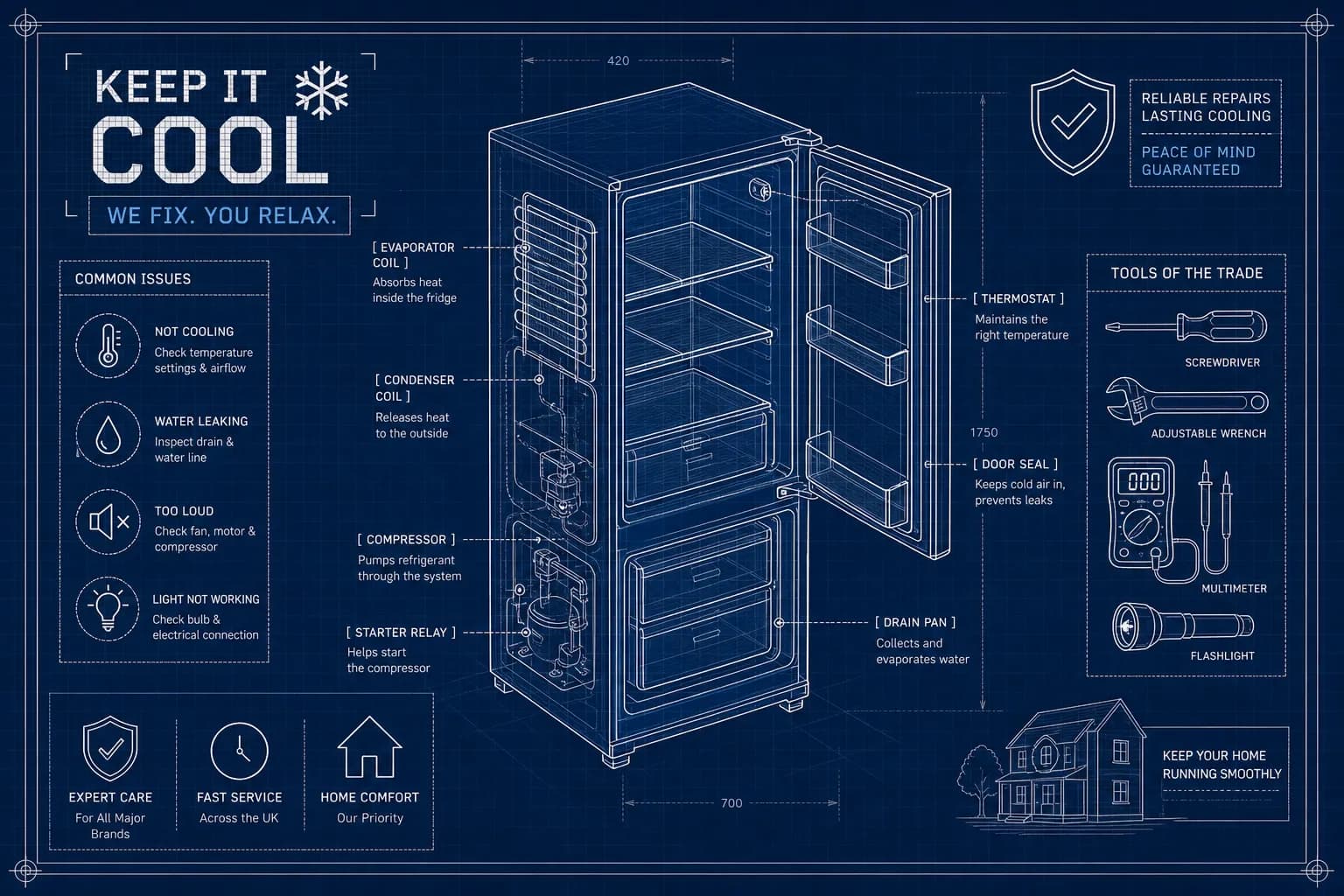
Immediate fridge fixes and real 2026 costs for UK homeowners. Learn DIY checks, stop leaks and ice, identify noisy compressors, and when to repair or replace.
You open the fridge and something feels wrong. The milk is warm, the leftovers have gone soft, and that low hum you used to ignore has either stopped entirely or turned into something louder. A fridge breakdown demands immediate attention, not because it is complicated, but because every hour of delay means food going to waste. This guide to refrigerator repair covers everything a UK homeowner needs to handle the situation properly: how to identify the fault, what repairs cost in 2026, when to fix versus replace, and what to look for in a qualified engineer. You will find real numbers, practical checks you can carry out right now, and a clear framework for making the right call.
The most common fridge problems fall into a small handful of categories: loss of cooling, water leaks and ice buildup, unusual noises, and the fridge running constantly without cycling off. A few quick refrigerator troubleshooting checks before you call anyone can tell you exactly which one you are dealing with, and sometimes resolve the issue entirely. Start with the obvious before assuming the worst.
The single most common fridge complaint is a loss of cooling, and the causes are usually straightforward. First, confirm the temperature setting has not been knocked accidentally and that the vents inside the cabinet are not blocked by food pushed too close to the back wall. Then pull the fridge away from the wall and check the condenser coils at the rear or base: a thick layer of dust forces the compressor to work harder and reduces cooling efficiency significantly. Inspect the door seal by running your fingers around the full perimeter and looking for cracks, gaps, or sections that have gone stiff and no longer sit flush against the frame.
If the freezer compartment is cold but the fresh-food section is warm, the most likely cause is an airflow or defrost-system fault rather than a compressor problem. The evaporator fan, which moves cold air between the two sections, may have stopped working, or ice buildup may be blocking the airflow path. Either fault needs a qualified fridge technician to diagnose properly, but knowing this distinction before the engineer arrives helps the conversation go faster.
Internal water pooling, usually visible as a puddle at the base of the fridge interior, almost always points to a blocked defrost drain. The drain channel that carries meltwater away from the evaporator gets clogged with debris or ice over time. You can attempt a first fix by flushing the drain with warm water using a turkey baster or a small funnel. If the leak is on the floor at the back of the fridge rather than inside the cabinet, check the water supply line for kinks or loose connections at the wall valve.
Frost buildup on the back wall of the freezer or inside the fridge compartment signals a defrost-system fault. This could be a failed defrost heater, a faulty defrost timer, or a worn door seal letting warm, humid air enter the cabinet. A manual defrost will temporarily clear the ice, but if frost returns within a day or two, the underlying component fault still needs attention from a fridge repair service.
A clicking sound when the fridge tries to start can have several causes, a failing compressor start relay is common and relatively inexpensive to fix, but electrical faults and thermostat issues can produce similar sounds. If clicking persists beyond a few cycles, have an engineer diagnose it rather than assuming a single cause. A grinding or squealing noise during operation typically indicates a fan motor with worn bearings, either the condenser fan at the rear or the evaporator fan inside the freezer section. Rattling often means nothing more serious than loose items on top of the fridge or vibration against a nearby surface. The noises to take seriously without delay are a loud banging or a high-pitched whine that persists, both can indicate compressor strain.
A fridge that runs constantly without cycling off is almost always caused by dirty condenser coils, a poor door seal, or a faulty thermostat. Clean the coils first and check all door seals before calling for service. If the constant running continues after those checks, the thermostat or control board is the likely culprit, and that requires professional refrigerator repair diagnosis.
Having realistic numbers before you book a fridge repair removes the uncertainty that makes people hesitant to call. In 2026, most UK fridge repairs land between £150 and £250 for a standard job. Major sealed-system or compressor work pushes that figure toward £400 or above, but those are the minority of call-outs. For a broader UK-focused breakdown of typical repair prices and what influences them, see this fridge repair cost guide.
The cost structure for a standard UK fridge repair visit breaks down into three layers. Call-out fees typically run between £60 and £90, though in London they can reach £150 depending on the provider and time of day. Hourly labour sits at £40 to £80. Parts are then added on top. The most common fitted repair costs look like this:
Fixed-price services eliminate the risk of an open-ended bill. When a company agrees a fixed price before any work begins, you are not exposed to labour overruns or surprise parts markups, and that transparency is one of the clearest markers of a reputable fridge repair service. Be aware that fixed-price quotes typically cover the diagnosed fault; any additional faults discovered during the repair may be quoted separately before work continues.
A straightforward diagnostic visit with a simple part swap can come in under £150 all-in. The jump happens when sealed-system work, refrigerant handling, or compressor replacement is involved. Compressor work alone averages around £400 fitted, and when you factor in call-out and labour, the total can approach half the cost of a new mid-range fridge. That crossover point is exactly where the repair-or-replace decision becomes critical.
The decision feels more complicated than it is. Two factors determine the answer in almost every case: the repair cost relative to replacement value, and the age of the appliance. Work through both and the right call usually becomes clear within a minute.
The benchmark used across the appliance repair industry is this: if the repair cost exceeds 50% of what a comparable new fridge costs today, replacement is usually the smarter financial move. A worked example makes this concrete. If a comparable new fridge costs £600 and the repair quote is £120, the repair is 20% of replacement cost and is clearly worth doing. If the quote is £320, you are sitting at just over 50% of replacement cost, and the case for buying new starts to outweigh the case for repairing.
The 50% rule is a guide, not a hard rule. A fridge that is only three years old and showing its first fault still leans toward repair even if the quote is on the higher side. A fridge that has had two previous repairs in four years leans toward replacement even if this specific fix is cheap. Factor in the repair history before committing either way. For extra reading on weighing repair against replacement, see practical advice on whether to repair or replace your refrigerator.
Fridges under ten years old are generally worth repairing for most faults. Between ten and fifteen years, the decision depends on the severity of the fault and whether repeated failures are becoming a pattern. Once a fridge moves into the fifteen-to-eighteen-year range, the probability of further component failures after a successful repair rises sharply. A compressor failure six months after an otherwise clean repair is a common pattern at that age, and a scenario worth weighing before committing to an expensive fix. Many industry sources cite ten years as the point to start evaluating replacement seriously, with around eighteen years as the point where repair rarely makes financial sense.
A good engineer will tell you plainly what they found and give you a realistic picture of the appliance's wider condition before any work starts. If they flag signs of broader wear alongside the immediate fault, that information should factor into your decision. Any certified refrigerator service worth booking will do this, not just fix the presenting fault and move on.
Many homeowners delay calling for repair because they are unsure what they are agreeing to. Knowing exactly what the process looks like removes that hesitation and helps you hold any engineer to the right standard.
Most reputable UK appliance repair services offer next-day or same-week availability for standard bookings. Same-day slots are available for urgent faults and typically mean a visit within normal business hours on the day you call. Emergency cover, which includes after-hours response, is available through most established services at a premium above the standard rate. Once the engineer is on-site, a straightforward repair usually takes between one and three hours. Complex jobs involving refrigerant or compressor work may run longer, and in some cases parts need to be ordered before the final fix can be completed.
A professional fridge repair visit follows a clear sequence. The engineer arrives with the right diagnostic tools, carries out a full assessment of the fault before any work begins, and agrees a fixed price with you before touching any parts. The aim is to complete the repair in a single visit. On completion, you should receive a written service report confirming what was found, what was replaced, and any relevant parts warranty. These are good-practice standards described by consumer and trade guidance, not extras a customer should have to request.
Alpha Appliances Ltd is built around exactly this model: fixed-price diagnosis, first-visit resolution as the target, and a written record left with every customer. This is what you should expect from any certified engineer, not just hope for. If a company cannot confirm a fixed price before work starts or cannot provide a written report on completion, those are clear warning signs worth taking seriously before you book.
The engineer matters as much as the parts. A misdiagnosis wastes your money on unnecessary components. Poor-quality parts fail faster and may void a manufacturer warranty. The right technician gets it right on the first visit, so check credentials before booking.
In the UK, any technician carrying out repair work on a refrigeration system containing F-gas refrigerant must hold the correct personal F-gas qualification for the category of work involved. Category I is the broadest and covers all servicing, repair, maintenance, installation, and refrigerant recovery tasks. Lower categories cover narrower tasks such as recovery only or leak checking. Ask which category the attending engineer holds and confirm it covers the work you need. The certificate should be in the engineer's name, issued by an accredited body such as City & Guilds, BESA, or LCL Awards, and current at the time of the visit.
City & Guilds certification confirms broader appliance repair competence beyond refrigeration alone. For premium or warranty-protected appliances, manufacturer-trained or manufacturer-authorised engineers are the right choice. You can verify this directly with the appliance manufacturer by checking their approved service network before booking.
Before committing to any fridge repair service, a few direct questions will tell you most of what you need to know. Does the company carry out a full diagnostic before charging for parts? A reputable service diagnoses before it replaces. Is the quote fixed, or can it change once work is underway? Open-ended billing is a risk you do not need to accept. And can the company confirm the attending engineer holds the correct F-gas category for the work involved? Any company that hesitates on these points is worth reconsidering before you commit.
Alpha Appliances Ltd is designed to answer all of these questions with a clear yes, which makes them a useful reference point when evaluating any other fridge repair service across London and the South of England. Use those standards as your benchmark regardless of which company you ultimately choose.
Searching for appliance repair near me will surface a long list of options, and the quality varies considerably. When assessing local results, prioritise companies that display verifiable F-gas certification, publish fixed-price structures upfront, and carry independently verified customer reviews. Sole traders can be excellent, but confirm their qualifications directly rather than taking availability alone as a proxy for competence.
For homeowners in London and the surrounding area, same-week refrigerator repair is widely available from established services. Same-day slots are typically held back for urgent faults, so call early if your fridge has failed overnight. Outside London, next-day availability from regional appliance repair specialists is the realistic expectation for most standard faults.
Most standard refrigerator repairs in the UK fall between £150 and £250, including call-out, labour, and parts for common faults such as thermostat or door seal replacement. Compressor and sealed-system work typically runs between £300 and £480 fitted. Always get a fixed quote before work begins.
Use the 50% rule as your starting point: if the repair cost exceeds half the price of a comparable new fridge, replacement usually makes more financial sense. Age matters too, fridges under ten years old are generally worth repairing for most faults; those older than fifteen years warrant a closer look before committing to an expensive fix.
Check the temperature settings, clean the condenser coils, inspect the door seals, and confirm the internal vents are not blocked. If the freezer is cold but the fresh-food section is warm, the evaporator fan or defrost system is the likely area of concern. These checks take under fifteen minutes and can either resolve the issue or give the engineer a useful starting point. For a homeowner-friendly explanation of common cooling faults and their causes, see guidance from manufacturers on why a refrigerator may not be cooling.
Look for F-gas certification displayed on the company's website or booking page, fixed-price quotes confirmed before work starts, and independently verified customer reviews. Manufacturer-authorised engineer networks are worth checking for appliances still within or just outside warranty. Avoid any service that cannot confirm certification or insists on hourly billing without a capped estimate.
F-gas certification is a legal requirement in the UK for any engineer working on refrigeration systems that contain fluorinated greenhouse gas refrigerants. Without the correct category of certification, an engineer cannot legally handle refrigerant, meaning sealed-system or compressor work carried out by an uncertified technician may be unlawful and could affect your home insurance. Always ask for the certificate number and issuing body before the engineer starts work.
The process is straightforward when you follow the right sequence. Work through the refrigerator troubleshooting checks in this guide to identify the likely fault. Get a realistic cost in mind using the 2026 figures above. Apply the 50% rule if the quote is high and the fridge is older. Then choose an engineer with verifiable F-gas certification, a fixed-price quote, and a service record you can independently check.
Alpha Appliances Ltd offers certified, fixed-price fridge repair and fridge freezer repair across London and the Home Counties, with online booking and same-week availability for most standard faults. If you are ready to book refrigerator repair today, pick a slot that works for you and get your fridge sorted by an engineer who meets every standard this guide has outlined.
Book a visit from a certified Alpha engineer in minutes.
TRUSTED BY HOMEOWNERS
Fast, reliable, and warranty-backed repairs for every major brand.
Discover more tips from Alpha engineers.