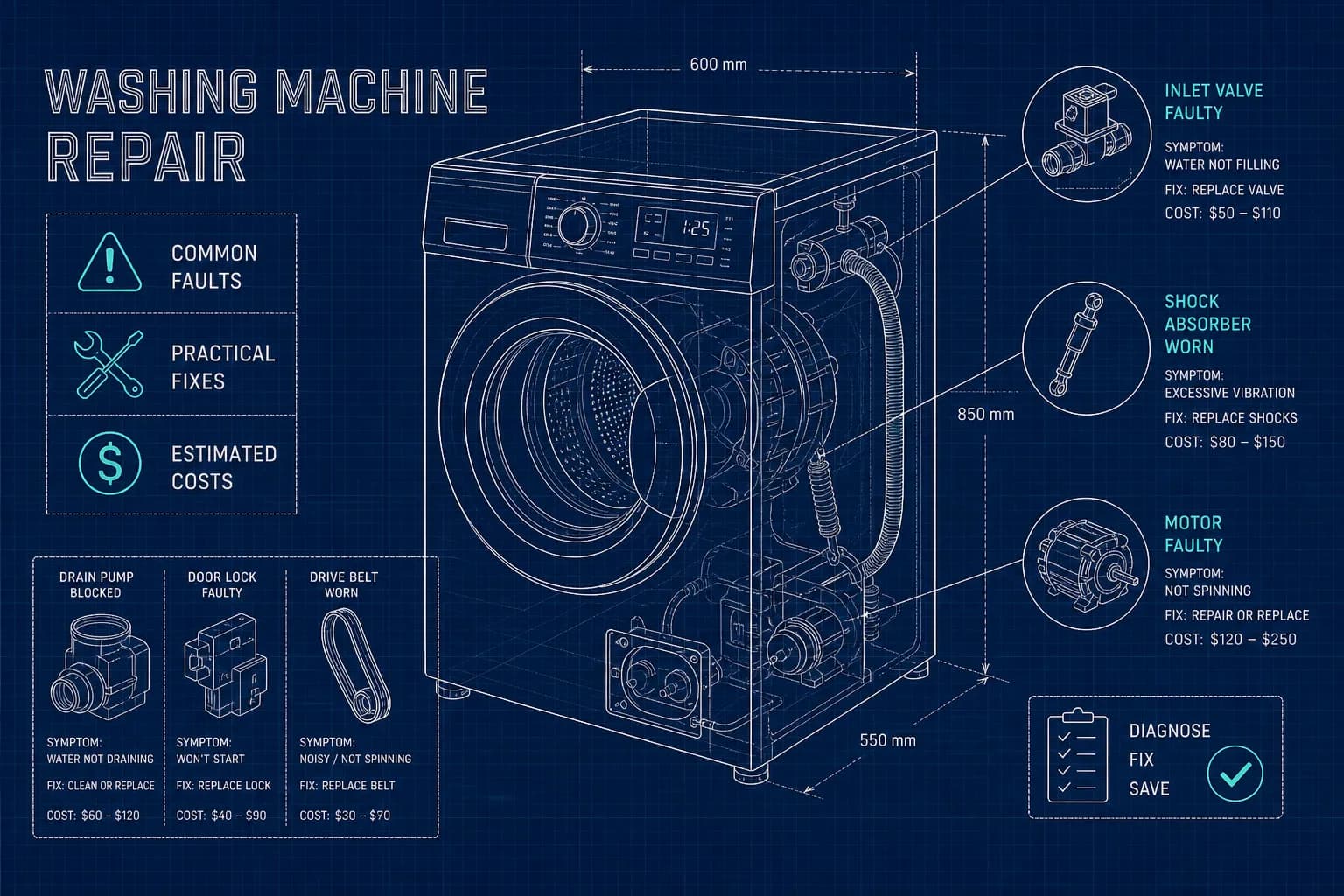
Washing machine troubleshooting guide: common faults, safe DIY checks, repair cost estimates and when to call a certified engineer, saving time and money.
Washing machine repair is one of the most disruptive household breakdowns you can face. The drum is full of soaking clothes, the display is showing a code you've never seen before, and you have no idea whether you're looking at a £70 fix or a £300 bill. Most faults are far more manageable than they first appear, and knowing which ones you can safely check yourself versus which ones need a certified engineer makes a real difference to how quickly, and affordably, you get sorted.
This guide covers the faults that account for the vast majority of washing machine repair call-outs across the UK, what each one usually means, and the safe checks you can try at home before picking up the phone. If the fault does turn out to need a professional, you'll also find realistic cost figures and a clear explanation of what to look for when booking. Some companies, including Alpha Appliances Ltd, operate on a fixed-price model with manufacturer-trained engineers, removing much of the uncertainty from the process.
While every brand has its quirks, the overwhelming majority of washing machine breakdowns fall into a small number of recurring fault categories. Understanding which category your problem sits in is the fastest way to decide on your next move.
There are two distinct scenarios here, and the difference matters. If the machine judders, struggles, and then cuts out, an unbalanced load is the most likely culprit, the machine's safety cutout has done exactly what it's designed to do. If you can hear the motor humming but the drum simply isn't moving, that points to a failing drive belt or a worn motor, both of which need professional attention. A grinding or rumbling noise during the spin cycle, particularly in older machines, often signals drum bearings on their way out. Bearings typically last around ten years, but heavy use shortens that lifespan considerably.
These three faults share a common root cause more often than not: a blocked pump filter or a kinked drain hose. A leak around the door frame usually points to a worn or debris-covered door seal rather than anything more serious. If you've cleared a drain fault but a damp smell persists, one possible cause is standing water trapped in internal hoses or the sump, which can encourage mould growth and, over time, cause secondary damage to surrounding cabinetry.
Modern washing machines display fault codes rather than simply stopping, which is actually useful once you know how to read them. A flashing E or F code is the machine telling you something specific about where the fault lies. Codes vary significantly between brands: Bosch uses codes like E18 for drainage faults and E21 for motor errors, while Samsung, Hotpoint, and Indesit each use entirely different systems. (See our guide Fixing Hotpoint Washing Machines in Aldwych for common Hotpoint fault patterns.) The manufacturer's manual or support page will list the codes specific to your model, that single step prevents a lot of unnecessary tinkering. For Bosch machines specifically, see Bosch error codes explained. If the machine fails to start at all and no code appears, check the door latch and the power supply before assuming a deeper fault.
There are genuinely useful things you can check at home, and doing them first either solves the problem outright or gives the engineer a head start when they arrive. Before you touch anything, power the machine off at the socket and turn off the water supply at the isolation valve. The machine must be fully off before you start any of them.
The pump filter is one of the most commonly overlooked components in any washing machine, and a blocked one causes a surprising number of "won't drain" call-outs. On most machines, it sits behind a small access panel at the bottom front. Place a shallow tray and a towel underneath before you unscrew the cap, because water will come out. Remove any lint, coins, or debris from the filter housing, then check the drain hose at the back of the machine for kinks or blockages. If you need washing machine repair for a drainage fault, clearing the pump filter is always the right first step, a straightened hose and a clean filter resolve a significant proportion of drainage complaints without any further work needed.
If the machine has cut out mid-spin, open the door and redistribute the load. Heavy items like towels or denim frequently clump together and throw the drum off balance. Once redistributed, restart the spin cycle and see whether the machine completes it. While the door is open, run your finger around the rubber door seal and check for small items of clothing lodged in the fold, debris built up around the rim, or any visible tears. A clean, undamaged seal combined with a properly balanced drum sorts out a large number of spinning and leaking complaints without a single tool or penny spent.
Some faults look approachable but involve live electrical components, pressurised water connections, or heavy moving parts that can cause real injury or further damage without the right training and tools. That line is worth taking seriously.
Motor failure requires specialist diagnostic equipment to confirm before any parts are ordered, and the replacement itself involves dismantling components that sit close to the machine's electrical system. Drum bearing wear, once confirmed, means the machine needs to be substantially disassembled, and on many modern machines the drum is sealed, making the job even more involved. Control board faults are particularly unpredictable: the symptoms often mimic other problems, and fitting the wrong replacement board wastes both money and time. Heating element replacement and inlet valve issues both involve direct contact with water connections and electrical terminals. Any fault that persists after you've worked through the safe DIY checks belongs in this category too.
For these repairs, the engineer's qualifications genuinely matter. When booking washing machine repair for a complex fault, look for engineers who hold City & Guilds certification and Safe Contractor approval, carry a broad stock of washing machine spare parts, and can demonstrate a strong first-time fix rate. Fewer return visits means less disruption to your household. Alpha Appliances Ltd is one company operating to these standards across London and the South of England. For information on recognised training and what an engineer should be able to demonstrate, see appliance repair technician qualifications. You can also read more about brand-specific services like Fixing Westin Washing Machines in Aldwych Efficiently to get a feel for local expertise.
City & Guilds certification is the recognised benchmark for domestic appliance engineers in the UK. You can verify it before booking by asking for the engineer's 20-digit e-Certificate authentication code and checking it on the City & Guilds verification portal. Safe Contractor approval confirms the company meets rigorous health and safety standards, which matters for insurance purposes and parts warranties. A reputable company will provide both without hesitation. If an engineer is reluctant to share credentials, that is a clear red flag.
Most common washing machine repairs fall in the range of £100 to £180 all in. Complex jobs involving the motor or drum can reach £250 to £400. A quote of £160 for a door seal replacement, for instance, sits at the high end of what's expected; £90 is more typical. Knowing these benchmarks before you receive a quote means you can assess it with confidence. For a broader breakdown of typical pricing and what to expect from installers, consult a washing machine repair cost guide.
Most engineers charge a call-out or diagnostic fee of £50 to £130 to attend and assess the fault. Labour on top of that typically runs £50 to £100 per hour across the UK, rising to around £150 per hour in London. The most important protection you have as a customer is a fixed-price quote agreed in writing before any work begins. An open-ended hourly rate with no cap exposes you to a bill that can escalate significantly once the machine is already in pieces. When comparing washing machine servicing cost against repair cost, a service visit that catches early wear can often head off a more expensive fault later.
Door seals are one of the most frequently replaced components and typically cost £50 to £80 fitted. A pump replacement runs around £85, motor brushes around £80, and a heating element around £30. Control board replacement sits at approximately £130, while a full motor replacement is the most expensive single repair at £250 to £400 all in. The repair versus replace threshold is straightforward: if the repair quote exceeds 50% of the cost of a new equivalent machine, replacement is generally the smarter financial decision. For a mid-range machine priced around £550, that threshold sits at roughly £275.
The right choice here depends on one key factor: whether your machine is still under its original manufacturer's warranty. If it is, check the warranty terms before booking anyone, as some brands will void cover if an independent engineer carries out the repair. It's sensible to confirm your position by reviewing guidance on consumer rights for appliances before you proceed.
Independent engineers with manufacturer training are typically 15 to 40% cheaper than brand-authorised service centres and offer significantly faster availability. Split across two points: in London and the South of England, same-day or next-day appointments are often achievable if you book early and flag the fault as urgent; elsewhere, next-day slots are common with established local providers. A well-established independent engineer can source genuine washing machine spare parts and deliver the same standard of repair without the extended wait times that manufacturer centres frequently carry.
A reputable UK repair company should offer a minimum 12-month guarantee on parts and labour as standard. Before any work starts, you should receive a written quote that states exactly what is covered, what is excluded, how to make a claim, and the engineer's name and credentials. After the job is complete, a service report should be issued: this is essential for landlords managing rental properties and for anyone who may need to make an insurance claim. Watch out for engineers who offer no written quote, provide no parts guarantee, or accept cash payments only.
Reliable means verified reviews, transparent pricing, certified engineers, and clear communication about when the engineer will arrive. In London and major UK cities, same-day appointments are available if you call early in the morning and clearly describe the fault, particularly if the machine is leaking, since active leaks are typically prioritised to prevent further property damage. In other areas, next-day availability is common with established local providers. Searching for appliance repair near me is a useful starting point, but always verify credentials and confirm fixed pricing before confirming a booking.
For homeowners in London, the Home Counties, Berkshire, Surrey, Hampshire, or Dorset, Alpha Appliances Ltd offers straightforward online booking, with engineers arriving stocked with the parts most commonly needed. The fixed-price model means the figure quoted before the job starts is the figure on the invoice when the engineer leaves. Book online at Alpha Appliances Ltd or call to discuss a same-day slot if the fault is urgent. If you need combined appliance help, consider local specialist pages such as Fast Britannia Washer Dryer Repairs Aldwych, Book Today for washer-dryer specific appointments.
The more detail you provide at the point of booking, the higher the chance of a first-visit fix. Have your machine's brand and model number to hand: this is usually printed on a label inside the door frame. Describe the fault clearly, note any error codes displayed, and mention how long the problem has been occurring. An engineer who arrives knowing the likely fault and carrying the probable replacement part, a common advantage of washer engineer services that ask the right questions upfront, completes the job in one visit far more often than one arriving with no prior information.
Your booking confirmation should state a fixed or capped price, the guarantee period covering both parts and labour, the engineer's name and credentials, and confirmation that a service report will be issued after the job is complete. If any of these elements are missing from a confirmation, ask for them in writing before the appointment goes ahead.
The decision process is straightforward once you know the steps. Start with the pump filter and load balance. Check the error code against your manual. Then honestly assess whether the fault falls within the safe home-check category or whether it involves electrical components, pressurised connections, or worn mechanical parts that need professional tools and training. If it does, book a certified engineer with a fixed-price guarantee rather than accepting an open-ended quote from an unknown trader.
Most washing machine repair jobs cost between £100 and £180 for common faults and are completed in a single visit when the engineer carries the right parts. A well-documented repair record can help extend the working life of the machine and simplifies any future servicing, warranty, or insurance claim. For fast, reliable washing machine repair across London and the South of England, Alpha Appliances Ltd offers certified engineers, fixed pricing, and no hidden fees. Book online today or call to secure a same-day slot and get your machine back to full working order.
Book a visit from a certified Alpha engineer in minutes.
TRUSTED BY HOMEOWNERS
Fast, reliable, and warranty-backed repairs for every major brand.
Discover more tips from Alpha engineers.