Quickly diagnose a fridge freezer not cooling properly. Learn fast checks for coils, defrost, fans and seals, or call Alpha Appliances Ltd today.
If you're wondering how you can troubleshoot a fridge freezer that isn't cooling properly, you're not alone. A fridge freezer that's lost its cooling is one of the most stressful household faults you can face. Food starts to spoil, the compressor hums away, and it's not obvious whether you're looking at a simple fix or an expensive repair. As engineers, this is one of the most common callouts we handle at Alpha Appliances Ltd, and the good news is that the majority of cases come down to just a handful of causes. Once you know which one you're dealing with, the path forward is straightforward. Work through this guide in order and the checks will often identify common, fixable causes, though sealed-system or electrical faults will still require a professional diagnosis.
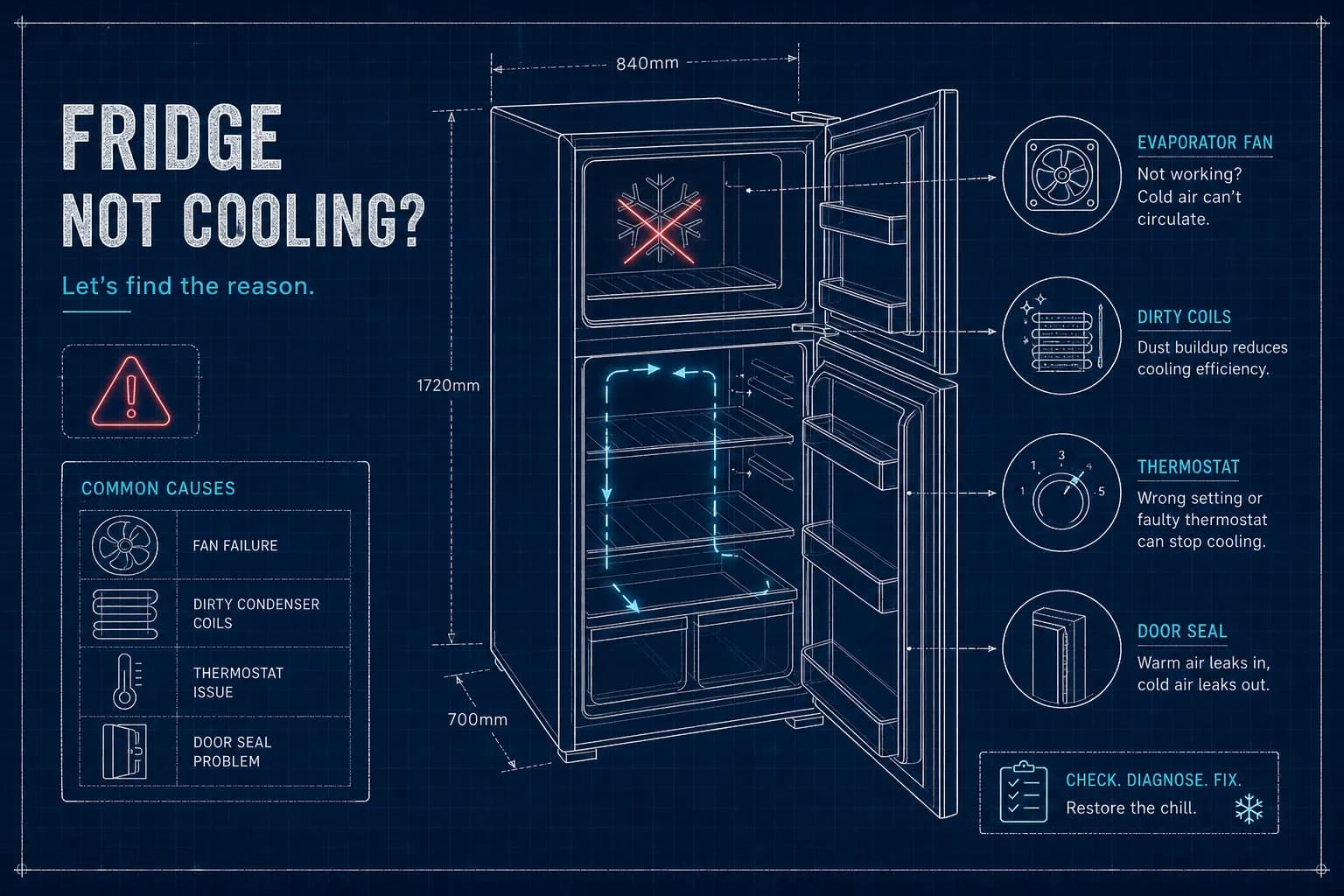
Before you touch anything, it helps to understand what's actually going on inside the cabinet. There are four main culprits responsible for the vast majority of cooling failures, and each one presents a slightly different set of symptoms.
The condenser coils are responsible for releasing heat from the refrigerant into the surrounding air. Over time, dust, pet hair, and kitchen grease coat them in a thick layer of unintended insulation. When the coils can't shed heat efficiently, the compressor works harder and longer, and the cabinet temperature gradually climbs. This is one of the most preventable causes of poor cooling, and the first thing worth ruling out.
Modern fridge freezers run a defrost cycle roughly four times a day to prevent ice from building up on the evaporator coils. When the defrost heater, thermostat, or control board fails, that ice accumulates unchecked. Eventually it forms a thick crust that completely blocks airflow through the evaporator. A tell-tale sign of this fault is a freezer compartment that feels cold near the walls and shelves but produces a warm fridge section above, a classic pattern of freezer warm but fridge cold reversed, or indeed the fridge cold but freezer struggling.
If the evaporator fan motor fails, cold air simply stops circulating from the freezer coils into the rest of the cabinet. The freezer itself may remain cold, but the fridge side warms up noticeably. Blocked internal vents cause a similar effect: overstuffing the fridge or pushing items against the back wall restricts airflow and creates warm spots. A faulty thermostat presents differently. The compressor never receives the signal to run, so the whole unit stays warm from the outset.
These checks cost nothing, require no tools, and take under fifteen minutes. They rule out the most common simple causes before you commit to any kind of repair. Work through them in this order.
The correct temperature for a fridge compartment in the UK is between 2°C and 4°C; the freezer should sit at -18°C. After a power cut or a clean, dials and digital controls are often knocked accidentally. Check that the setting hasn't drifted and adjust it if needed. If you change the setting and the compressor doesn't respond, use an appliance thermometer to confirm whether temperatures are actually dropping, listen for compressor cycling, and, if there's still no sign of cooling after a couple of hours, arrange a continuity or multimeter check on the thermostat, as this points to a component fault rather than a simple calibration issue.
Close the fridge door on a sheet of paper, leaving half of it sticking out, then pull gently. If the paper slides out with no resistance, the seal at that point is failing. Repeat this check at several positions around both doors, paying particular attention to the corners. As an alternative, place a lit torch inside the fridge, close the door, and look for light escaping around the edges. A failing gasket often shows physical signs too: cracks, warping, or sections that feel soft and compressed rather than firm.
The vents that distribute cold air are typically found on the back wall of the fridge compartment and between compartments. If items are stacked directly against them, cold air has nowhere to go. Take everything out, locate the vents, and make sure there's clear space in front of each one. This is a seconds-long visual check that occasionally turns out to be the entire problem.
If the checks above haven't identified the fault, dirty condenser coils are the next thing to address. This is the most impactful DIY maintenance task you can carry out, and it's well within reach for any homeowner prepared to set aside one to two hours and follow a few safety steps. Access and the level of build-up will affect how long it takes.
Gather a soft brush or a small vacuum with a brush attachment, a pair of gloves, safety glasses, and optionally a fin comb if you have one. Before you do anything else, physically unplug the fridge freezer from the wall socket. Turning the temperature dial to zero is not sufficient, the unit needs to be fully disconnected from the power supply. Condenser coils are located either underneath the unit behind the kickplate or on the back panel, depending on your model. Check your manual if you're unsure.
Make coil cleaning part of your annual routine. Every 6 to 12 months is sufficient for most households; every 2 to 4 months if you have pets that shed heavily. It takes very little time and it keeps the compressor from overworking itself into an early failure. For additional step-by-step advice on coil maintenance see the government-backed guide on clean refrigerator condenser coils and manufacturer cleaning tips on how to clean condenser coils.
Some faults sit firmly in professional territory, not because the diagnosis is complicated, but because the repair involves refrigerant handling, sealed system work, or electrical components that carry a safety risk without the right training and certification. Recognising these symptoms early saves you from running a damaged unit and racking up a larger repair bill.
If the compressor is running continuously yet the cabinet stays warm, the unit is working hard but achieving nothing. This pattern typically indicates one of three things: a failed start relay, a seized compressor, or a refrigerant leak. A failed start relay often produces a distinctive click-buzz-click sound as the compressor attempts to start, fails, and tries again. Running the unit in this state puts the compressor under sustained stress and risks turning a moderate repair into a full compressor replacement.
A refrigerant leak presents with a specific cluster of signs: a hissing or bubbling sound from the rear of the unit, oily residue near the compressor, ice forming on external refrigerant lines, and a refrigerator not cooling despite the compressor running. Refrigerant handling is a licensed trade in the UK, and attempting to address a leak without the correct certification is both illegal and genuinely dangerous. For guidance on recognising leaks and when to call a technician, see advice on how to identify refrigerant leaks, and manufacturer's troubleshooting tips in the Maytag guide to refrigerators not cooling. Defrost heater failure is another fault that falls into the professional-only category, it requires board testing, component diagnosis, and precise replacement work that goes well beyond safe DIY territory.
If you've worked through the checks above and the fridge freezer is still not cooling, the fault almost certainly requires a qualified engineer. The question then becomes whether repair makes financial sense, or whether the age and condition of the unit tips the balance toward replacement.
Any fault involving the sealed system, refrigerant charge, compressor, defrost heater, or control board requires a certified engineer. Attempting these repairs without the correct qualifications risks voiding your manufacturer's warranty, creating a safety hazard, and potentially worsening the original fault.
The sealed system in particular is not something to experiment with. If you live locally we provide specialist callouts and have experience with many models, including Fixing Haden Fridge Freezers in Aldgate Efficiently.
Repair costs in the UK vary depending on the fault and the specific model, but these ranges give you a realistic picture of what to expect:
The key decision point is this: if your unit is over ten years old and the fault involves the compressor or sealed system, replacement often makes more financial sense than repair. A compressor job on an ageing fridge can cost more than a new mid-range appliance, and there's no guarantee the rest of the unit holds up once one major component has failed.
For any fault that sits beyond the DIY checks above, Alpha Appliances Ltd offers fixed-price fridge freezer repairs with no hidden call-out fees. Our City & Guilds certified engineers cover London and the Home Counties, working across all major brands including Miele, Bosch, AEG, and Samsung. We also specialise in Fixing Electrolux Fridges in Aldgate Quickly, and provide expert repairs for other local models such as Fixing Belling Fridge Freezers in Aldgate. You'll receive a clear, agreed price before any work begins, no surprises when the job is done.
The logical order for diagnosing a fridge freezer that's not cooling is: check the temperature settings and controls first, test the door seals, inspect the internal vents, then clean the condenser coils. If none of those steps resolves the fault, the symptoms you've observed during the checks will point clearly toward a compressor issue, a refrigerant leak, or a defrost system failure, all of which need a qualified engineer.
Most cooling problems do have a fixable cause, and many of them don't require a callout at all. But when they do, speed matters: a warm fridge means food spoilage, and running a faulty compressor prolongs the damage. If you've worked through the checks in this guide and still don't have cold air, get in touch with Alpha Appliances Ltd for a diagnostic visit and a fixed-price quote before any work begins.
This pattern most commonly points to a defrost system fault or a failed evaporator fan. Ice may have built up on the evaporator coils, blocking airflow into the freezer compartment. A qualified engineer can confirm the cause with a component test.
Every 6 to 12 months is sufficient for most households. If you have pets that shed heavily, aim for every 2 to 4 months to stop build-up from reducing the compressor's efficiency.
A hissing or faint bubbling sound from the rear of the unit is a common indicator, often accompanied by oily residue near the compressor. If you suspect a leak, switch the unit off and call a certified engineer, refrigerant handling requires a licence in the UK.
It depends on the fault. Minor repairs such as a door seal or thermostat replacement are usually worth carrying out regardless of age. For major faults involving the compressor or sealed system, replacement is often the more cost-effective option once the unit is over a decade old.
If you adjust the temperature setting but the compressor doesn't cycle on, or if the unit runs continuously without reaching the correct temperature, a faulty thermostat is a likely cause. An engineer can confirm this with a continuity or multimeter test. For further reading on thermostat issues see manufacturer and trade resources that outline common fridge thermostat warning signs.
Book a visit from a certified Alpha engineer in minutes.
TRUSTED BY HOMEOWNERS
Fast, reliable, and warranty-backed repairs for every major brand.
Discover more tips from Alpha engineers.