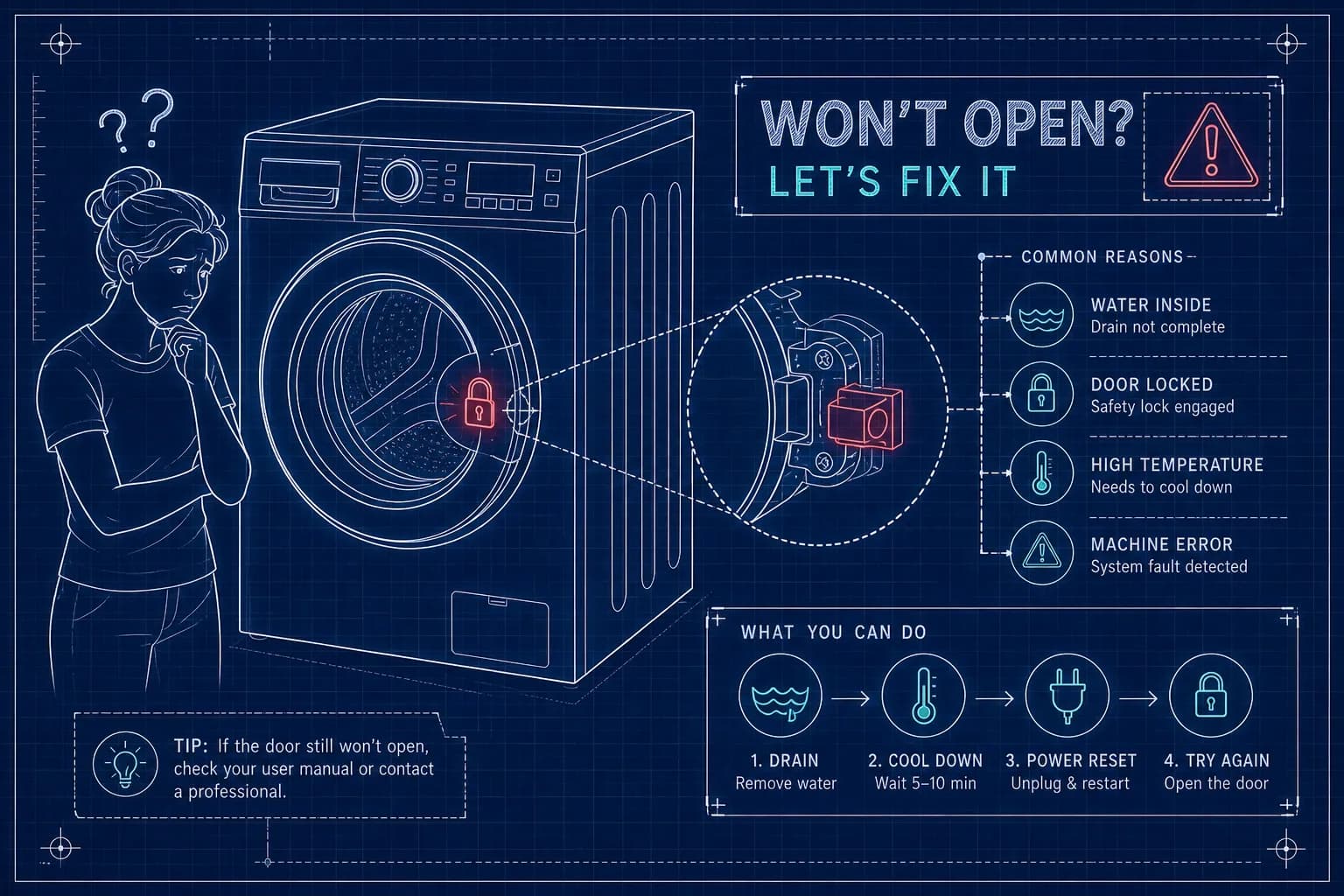
Washing machine door won't open? Learn checks to drain water, reset electronics, disable child lock, use the emergency release, and when to call a pro.
The most common reasons a washing machine door won't open are water still sitting in the drum, a cycle that hasn't fully finished, an active child lock, or a faulty door latch or interlock. In many cases, a safe sequence of checks done at home will resolve the problem without any tools and without forcing the handle. Door-latch and interlock faults are among the most frequently reported washing machine issues, so knowing exactly where to start saves time and prevents unnecessary damage. This guide walks you through diagnosing the specific cause, performing the right fix in order of simplicity, and recognising the point at which a certified repair is the safer call. If you've searched for something like washing machine door wont open and aren't sure where to begin, start with the key takeaways below.
Before reaching for any fix, it helps to understand which of the four main causes applies to your machine. Each one has a distinct symptom, and identifying yours correctly saves time and prevents unnecessary steps. The sections below map directly to those four causes in order of likelihood, so work through them in sequence.
Your machine locks the door automatically whenever it detects water inside the drum. This is a safety feature, not a fault. A blocked pump filter, a kinked drain hose, or a failed drain pump can all leave several litres of water sitting in the drum long after the cycle has ended. You can confirm this simply by looking through the door glass. If you can see water, draining it is the fix, not resetting the machine.
After a hot wash at 60°C or 90°C, the door interlock can take anywhere from one to twenty minutes to release once the programme ends. The machine holds the lock engaged until the drum and remaining water cool to a safe temperature. A paused or incomplete programme will also keep the door locked. Check that the display shows the cycle has fully ended, then wait five minutes. If the machine is still mid-programme, either let it finish naturally or select a Cancel or Drain option from the control panel.
When the child lock is switched on, the machine ignores all button presses, including any attempt to open the door. It often presents as a frozen or completely unresponsive panel. Look for a key symbol, padlock icon, or CL on the display. To deactivate it, hold the designated button combination for three to five seconds. On Hotpoint machines, this is typically the Temperature and Spin buttons held simultaneously. On Bosch, hold the Start button for three to five seconds. Samsung models usually require holding Spin and Temperature together until the icon disappears. These combinations vary by model, so check the label beside the lock symbol on your control panel, or consult your model's user manual, if the above doesn't match your machine.
If none of the above causes match your situation, the door-lock mechanism itself is the likely culprit. A snapped handle, a worn latch catch, or a failed interlock relay will keep the door locked regardless of how many times you press Cancel or wait. This is the scenario that typically requires an engineer. As a guide, a replacement interlock in the UK costs roughly £100 to £150 fitted, including parts and labour, based on typical 2026 independent engineer pricing, though the exact figure will depend on your brand and model.
A power reset is always the first practical step, because a temporary electronic glitch can trigger a door-lock fault that clears completely once the control board restarts. Before you start, confirm the drum has stopped completely and is not hot to the touch. If the padlock symbol on the display is still lit, do not attempt to open the door under any circumstances.
On some Samsung and LG models, holding the Start/Pause button for approximately five seconds while the machine is unplugged can perform an additional board-reset step, though the exact sequence varies, so check your manufacturer's guidance for your specific model. If the door remains shut after a full reset and there is no visible water in the drum, move on to the emergency release section below.
A washing machine door that won't open with water sitting in the drum is one of the most common fault types reported by homeowners. Drain the drum first, and the door will usually unlock on its own once the machine detects that the drum is empty. Before you start, gather rubber gloves, old towels, a shallow baking tray or pan, and a bucket. Lay towels around the base of the machine before opening the filter panel, even what appears to be a small amount of trapped water can amount to several litres, and it will spill quickly.
Locate the lower access panel at the bottom front of the machine. On most front-loaders, this clicks open without tools. If it appears screwed in, a flat-head screwdriver will release it. Once the panel is open, look for a small emergency drain hose clipped to the inside. If one is present, unclip it, remove the cap, and drain into the shallow pan in stages, tightening the cap each time the pan fills to avoid overflow.
If there is no separate drain hose, turn the pump filter cap very slowly anti-clockwise. Do not remove it fully at first. Let water trickle out into the pan, re-tighten the cap to empty the pan into the bucket, then repeat until no more water flows. Once the drum is empty, remove the filter completely and clear any debris, lint, coins, hairpins, or buttons are the most common blockage culprits and are worth clearing thoroughly. Refit the filter securely, close the access panel, then try the door handle.
Many front-loading washing machines include a mechanical backup release for exactly this situation, though the location and method vary by brand and model year. On Hotpoint NM11 models and Bosch Serie 4 machines, for example, the release is located inside the lower front cavity, beside the pump filter, behind the access panel you opened in the previous step. It typically takes the form of a small coloured tab, pull cord, or plastic ring.
Always unplug the machine and turn off the water supply before using the emergency release. Pull the tab or cord firmly but smoothly in the direction indicated, usually downwards or towards you. Do not yank it sharply and do not insert any tool into the door latch itself. Once you hear a click, the door should open with light pressure on the handle.
If the release cord snaps or the door still won't move after you've pulled the tab correctly, stop immediately. Forcing the latch risks breaking the interlock assembly, which turns a straightforward repair into a significantly more expensive one. If the exact position of the release is unclear on your model, search for your brand name, model number, and "emergency door release" on the manufacturer's website, a search that takes under a minute and prevents unnecessary damage.
An error code on the display is the machine's control board telling you directly what it has detected. If your washing machine door won't open and one of the following codes is showing, the table below gives you the likely cause before you decide on a next step. Note that codes can vary between models and production years, so confirm against your machine's manual where possible.
Codes can sometimes be transient. A full power reset should always be the first response before assuming component failure. Also check the door seal and the drum opening for any clothing caught in the gap, which can prevent a proper close and trigger the same codes. If the code returns immediately after a successful reset, the interlock or control board will need professional diagnosis.
Some door faults sit outside what's safe or practical to fix at home, and recognising those signs early prevents a manageable repair from becoming a costly one. Each of the following points to a part failure, not a reset or drain fix.
At Alpha Appliances Ltd, our City & Guilds qualified engineers stock common interlock and latch parts, keeping call-outs efficient and minimising the need for return visits. A fixed-price diagnostic visit removes the uncertainty of not knowing what the fault is or what it will cost. You'll know the price before any work begins, and you'll receive a full service report at the end of every visit, particularly useful for landlords managing rental properties with documented maintenance obligations.
Booking is straightforward online or by phone. Independent engineers typically offer faster appointment turnaround than manufacturer service centres, which can involve longer waits, so if you need the machine back in service quickly, an independent repair visit is often the more practical option.
If your washing machine door won't open, the logical order of checks is straightforward: wait and reset first, drain the drum if water is visible, use the emergency release if needed, and check the error code against the table above. Working through these steps in sequence means you're addressing the most common and most fixable causes before considering a part replacement.
The single most important rule throughout is to avoid forcing the handle. Patience costs nothing; a snapped latch or broken interlock adds unnecessary expense to what is often a minor fault. In most cases, a stuck washing machine door comes down to one of four fixable causes, and each one has a clear, safe solution when approached correctly.
If you've worked through every step above and the door is still firmly shut, that's the right moment to bring in a professional rather than risk damaging the machine further. Get in touch with the team at Alpha Appliances Ltd to book an appointment at a fixed, transparent price. Our engineers cover London and the South of England and arrive prepared to diagnose and resolve the fault.
The most likely causes are residual water in the drum, a cool-down delay on the interlock after a hot wash, or a brief electronic glitch. Wait five minutes after the cycle ends, then try a full power reset as described above. If the door still won't release, check for water through the door glass and drain if necessary.
If the drum is empty and a power reset hasn't worked, the next step is the mechanical emergency release, located in the lower front cavity on most models. Always unplug the machine first. If the release tab doesn't free the door, the interlock or latch has likely failed and will need a replacement part.
Yes. When the machine can't drain, it keeps the door locked as a safety measure. Clear the pump filter using the steps in the draining section above. If the machine still won't drain after the filter is cleared, the drain pump itself may have failed. At that point, a certified engineer is the right call.
Book a visit from a certified Alpha engineer in minutes.
TRUSTED BY HOMEOWNERS
Fast, reliable, and warranty-backed repairs for every major brand.
Discover more tips from Alpha engineers.