
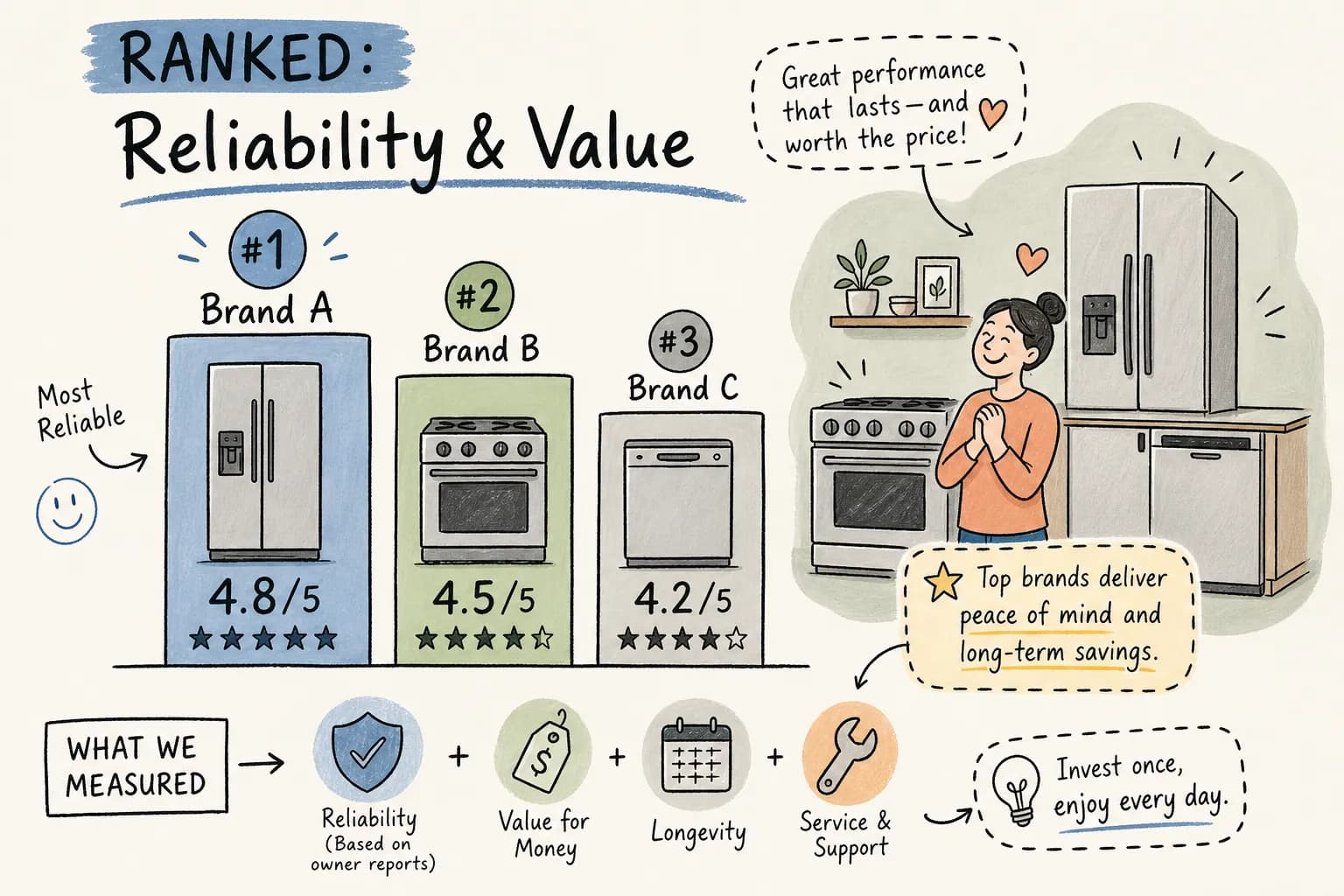
High-end appliance brands ranked by reliability and value
Buying a premium kitchen appliance is one of the bigger household decisions you'll make, and choosing between high end appliance brands affects not just performance on day one, but how many times you'll need to call an engineer over the next decade. Get it right and you have a machine that quietly does its job for 15 to 20 years. Get it wrong and you're facing repeat repair visits within five.
Five names come up consistently when UK buyers are shortlisting premium appliances: Miele, Bosch, AEG, Samsung and Siemens. These aren't positioned as the five most exclusive luxury choices on the market, but they are the brands that appear most frequently in UK kitchens at the premium end of the mainstream market, which is precisely why their reliability records matter. At Alpha Appliances Ltd, we have serviced all five across homes in London and the Home Counties, and that hands-on repair history gives us a clear picture of which brands hold up and which ones clock up the call-outs. This article covers reliability ratings, repair frequency, long-term value and a practical framework for choosing.
What actually separates high end appliance brands from mid-range alternatives
"High end" is not just about price or aesthetics. If you're spending significantly more, you need to know what you're actually buying. The genuine differentiators fall into two categories: build quality and technology depth.
Engineering standards and expected lifespan
Premium appliances use heavier-gauge components, tighter tolerances in motors and drums, and more rigorous factory testing than their mid-range counterparts. Miele is perhaps the most cited example: its appliances are engineered and tested to a 20-year design standard, which translates to an average reported lifespan of 15 to 20 years. Bosch typically sits in the 10 to 15 year bracket, while AEG averages around 12 to 13 years. Samsung comes in at 8 to 12 years depending on category. A standard mid-range appliance is generally designed to last 8 to 10 years, so even the lower-performing premium brands offer a meaningful step up in longevity.
Technology and performance features that justify the cost
The technology gap between premium and mid-range is real. Across these five brands, you'll find combi-steam ovens that retain moisture and texture far better than conventional heat, precision inverter motors in washing machines that adapt speed and torque to load, multi-zone induction with pinpoint temperature control, and smart connectivity that allows remote diagnostics and programme adjustment. These are not marketing features. They reflect genuine engineering decisions that require more complex manufacturing and, when properly maintained, tend to deliver better results across a longer working life than equivalent mid-range alternatives.
Miele, Bosch, AEG, Samsung and Siemens: what each brand stands for
Before comparing reliability scores, it helps to understand the philosophy behind each brand. They are not interchangeable, and knowing their core strengths makes the shortlisting process far simpler.
The German engineering trio: Miele, Bosch and Siemens
Bosch and Siemens both fall under BSH Group (Bosch-Siemens Hausgeräte), which means they share platforms and components across many product lines, a well-documented characteristic of the group that also explains their strong UK parts availability. The distinction between the two brands is in positioning: Bosch focuses on broad, dependable reliability across a full kitchen suite at a competitive premium price, while Siemens leans into smart-home integration and design-forward built-ins. Miele operates independently and occupies a premium-only position. It does not make budget or mid-range lines, which means every product it sells is built to the same high specification. Its strongest categories are dishwashers and laundry, where it consistently leads the market on both performance and durability.
AEG and Samsung: where innovation takes a different shape
AEG is the professional-grade brand within the Electrolux Group, and its laundry credentials are particularly strong. Its ProSteam and SensiDry technologies, featured across its current washing machine and heat-pump dryer ranges, are designed to reduce creasing and fabric stress during washing and drying, making AEG a credible alternative to Miele in that category. Samsung has taken a different route into the premium segment, building its case around smart-home integration, large-format refrigeration and AI-assisted appliances. Its reliability profile is strong for refrigeration and large-screen appliances, but it trails the European heritage brands in washing machines and dishwashers, a distinction that matters when you're comparing total cost of ownership.
How to compare high end appliance brands by reliability
Reliability data is the clearest indicator of which brand will serve you well long-term, and it's where the differences between these premium appliance manufacturers become most pronounced.
Which brands break down least often
Miele holds a five-star reliability rating from Which? for washing machines and consistently leads long-term reliability surveys across dishwashers and laundry. Bosch and Siemens sit just behind Miele in most independent assessments, benefiting from their shared component ecosystem and deep parts availability across the UK. AEG performs strongly in laundry but more variably across wider product ranges, while Samsung shows its weakest reliability profile in washing machines and dishwashers compared to the European brands.
Repair frequency data from the Archimede appliance repair dataset, a pan-European database tracking repair interventions across multiple markets, broadly supports this picture. The recorded share of all brand-tagged repair interventions breaks down as follows:
- Bosch: 9.0%
- Samsung: 7.9%
- Miele: 5.1%
- AEG: 2.9%
- Siemens: 2.6%
Repair frequency data and what it tells you
Repair frequency alone does not tell the whole story. What matters equally is the severity of the fault, the availability of parts and the labour cost involved. A brand with a marginally higher fault rate but cheap, readily available parts and a strong UK service network can cost less to maintain over its lifetime than a near-perfect machine that requires specialist-only components on a long lead time. This is why parts ecosystems matter as much as headline reliability scores when you're making a long-term purchase decision.
Long-term value and the real cost of owning a premium appliance
Shifting from purchase price to lifetime cost is where high end appliance brands often justify their premium most convincingly, and where the differences between them become financially significant.
Upfront price vs lifetime running costs
Miele sits at the higher end of the price range across all categories, with built-in ovens typically starting around £600 and extending well beyond £2,500 for flagship models. Bosch and Siemens offer competitive pricing within the premium tier, and AEG occupies a mid-premium position that represents a reasonable compromise between cost and performance. Samsung pricing varies considerably by product line. Layering in energy efficiency ratings, water consumption and expected lifespan changes the calculation significantly. A Miele dishwasher that runs reliably for 18 years and uses less water per cycle than a cheaper alternative may well cost less per year of use, even accounting for its higher purchase price.
Ranking high end appliance brands for long-term value
Not all appliances age equally. Miele's 20-year design standard is the clearest commitment to sustained performance, and its machines reflect that across their full lifecycle. Bosch and Siemens benefit from deep parts ecosystems that keep older machines economically repairable, extending their practical lifespan well beyond the point at which comparable appliances become unviable. Samsung typically shows shorter average lifespans than Miele or Bosch, particularly in washing machines; AEG sits in the upper-middle tier, generally performing well into its expected lifespan before showing signs of decline. These differences directly affect the repair-or-replace calculation when a fault develops later in an appliance's life.
Warranties, parts availability and aftercare support
The specification sheet ends the moment you take delivery. What matters after that is whether the brand and your chosen service team can keep the appliance running correctly.
What the five brands offer post-purchase
Warranty terms vary by brand and retailer, so it's worth checking the specific terms before purchasing. Miele, for instance, offers a confirmed two-year standard manufacturer's warranty on UK domestic appliances, with qualifying kitchen appliances purchased from an authorised UK retailer able to receive an extended three-year warranty on top of that in 2026, giving five years of total protection. Other brands in this group commonly offer two-year cover, but exact terms differ, confirm directly with the retailer or manufacturer before committing. The key condition across all brands is that warranty work must be carried out by authorised engineers using genuine parts. Using unqualified labour or non-approved components can void the warranty entirely, which is a material risk given the purchase price involved.
Why manufacturer-trained engineers make a material difference
When a Miele washing machine or a Bosch oven develops a fault, the repair outcome depends heavily on who carries it out. Non-genuine components can mask deeper faults, accelerate wear on adjacent parts, or simply fail earlier than the original. This is where the manufacturer-trained engineers at Alpha Appliances Ltd make a genuine difference. Our team holds City & Guilds certification and Gas Safe registration, carries genuine replacement parts for all five brands covered here, and is focused on getting the repair right first time. Fewer return visits means a lower total repair bill and less disruption to your household over the appliance's working life.
How to shortlist the right brand for your kitchen
The research above translates into a straightforward priority-to-brand mapping across the five most commonly serviced names in the premium segment.
Matching your priorities to the right brand
- Longest possible lifespan and best dishwasher performance: Miele
- Broadest reliability across a full kitchen suite with competitive premium pricing: Bosch
- Smart-home integration and modern design-led built-ins: Siemens
- Professional-grade laundry performance at a mid-premium price point: AEG
- Large-format refrigeration and a connected kitchen ecosystem: Samsung
Questions to ask before you commit
Before signing off on any premium appliance purchase, it's worth putting a few direct questions to your retailer or kitchen designer. Start by confirming the standard warranty term and whether an extended plan is available. Then establish whether local manufacturer-trained engineers are accessible for servicing in your area, and whether using them will preserve your warranty cover. Finally, check whether genuine replacement parts are stocked in the UK and what the typical lead time is if a component is needed. The answers will separate a well-supported purchase from a costly one.
The right brand is only half the decision
When you compare high end appliance brands side by side, clear patterns emerge: Miele leads on longevity and dishwashers, Bosch delivers broad reliability at an accessible premium price, Siemens suits smart-connected kitchens, AEG punches above its weight in laundry, and Samsung excels in refrigeration and connectivity. Each brand has a genuine case, and the right choice depends on your priorities across performance, reliability and long-term support.
What the brand comparison cannot tell you is who will service the appliance when it eventually needs attention. That part of the decision is just as important as the purchase itself. Choosing a manufacturer-trained team ensures the repair is done correctly the first time, with genuine parts, no voided warranty, and no guesswork.
If a premium appliance in your home needs a diagnostic or repair, book with Alpha Appliances Ltd online in four simple steps. We cover Greater London, Berkshire, Surrey, Hampshire and Dorset, and we carry parts for all five brands covered in this guide.
Need a repair today?
Book a visit from a certified Alpha engineer in minutes.