
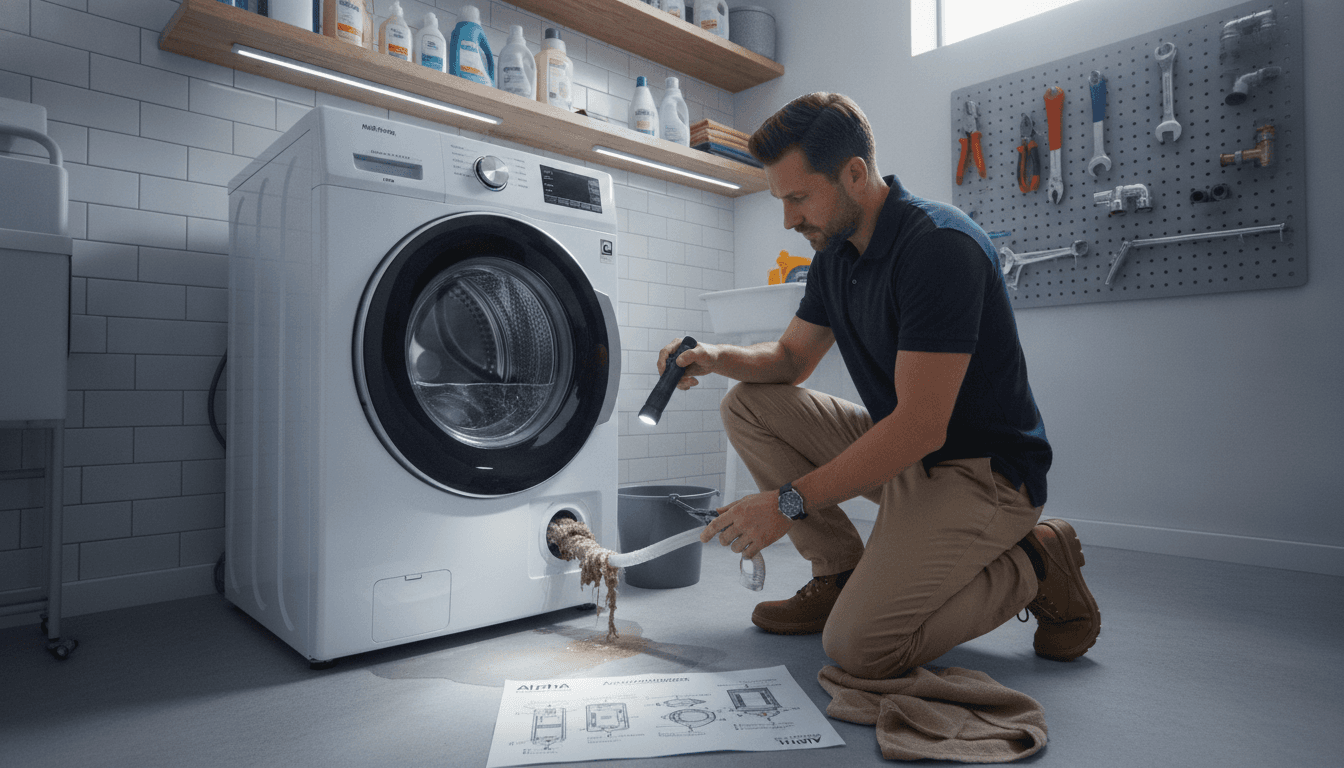
How to Fix a Washing Machine Not Draining - Book Online
Did you know nearly one in three appliance call-outs are due to blockages? A washing machine that won't drain can be really stressful. You might be left staring at a drum full of water, unsure of what to do. We're here to help you figure out and fix these common problems. Before you start, check out these essential steps to drain water from your washing machine safely. We aim to give you the knowledge to get your appliance working again quickly.
If the problem doesn't go away, you can book your appliance repair online at www.alphaappliances.co.uk. Our team will make sure your device gets the professional care it needs.
Key Takeaways
Most drainage issues come from simple clogs in the hose or pump filter.
Always put safety first by unplugging your appliance before checking inside.
Regular maintenance, like cleaning filters, stops blockages and saves money on repairs.
Look for kinks in the drain hose, as they can block water flow unexpectedly.
Professional help is available if you want a reliable, expert solution for your home.
Understanding the Problem
Managing a busy household can be stressful when appliances fail. Finding a drum full of water after a cycle is frustrating. But, finding a washing machine without draining solutions is often easier than you think.
Common Signs Your Washing Machine Is Not Draining
Spotting early signs can prevent big problems. You might see water still in the drum after the cycle ends. Sometimes, you'll hear the pump humming but no water moves. Other times, your machine might stop mid-cycle or show an error code. If you're not sure what these signs mean, check out washing machine not draining advice for your model.
Importance of Quick Action
It's crucial to fix drainage issues fast. Quick action prevents water damage to floors and cabinets. Acting quickly also keeps your appliance working well for years. About 70% of service calls are fixed with simple steps, like cleaning the pump filter or removing debris. Getting a washing machine not draining solutions early saves stress and keeps your home running smoothly. We're here to help keep your appliance in top shape.
Safety First: Preparing to Fix the Machine
Your safety is our top priority when you start to troubleshoot washing machine drainage issues at home. Before you start, make sure you have a safe and controlled area. These simple steps will keep you safe while you work on your appliance.
Disconnecting Power
Always pull out the mains plug to cut off the power before you touch any parts inside. Don't try to check the pump or wiring when the machine is still plugged in. Reliability means making sure the power is off to avoid accidents.
"Safety is not just a slogan; it is a way of life that protects you and your home during every repair task."
Using Protective Gear
Wear cut-resistant gloves to protect your hands from sharp objects. When you're trying to troubleshoot washing machine drainage issues, you might find hidden dangers like loose bra wires or broken glass. Quality protection lets you work safely without worrying about small injuries.
Check the Drain Hose for Blockages
If your washing machine is having trouble draining, the problem might be in the drain hose. Many washing machine drain problems come from blockages that stop water from flowing. Just by checking this part, you can often fix your machine without calling a repairman.
Inspecting for Kinks and Twists
First, pull your machine away from the wall to see the grey hose. Look for any bends, kinks, or twists that might block water flow. Even a small bend can cause big problems with draining.
It's important to install the hose correctly for it to work well. Make sure the hose's top is between 34 and 96 inches from the floor. Also, don't push the hose more than 6 inches into the standpipe to avoid siphoning issues.
Cleaning the Hose
If the hose looks straight, there might be something inside blocking it. Take off the hose from the standpipe to find any lint, coins, or other stuff that might be stuck. A clean hose is key for your machine to work right.
After you've cleaned out any blockages, put the hose back on securely. Make sure it's tight to avoid leaks. Regular checks will help you avoid future problems and keep your laundry going smoothly.
Issue Type
Common Cause
Recommended Action
Physical Kink
Machine pushed too close to wall
Reposition for clearance
Internal Blockage
Lint or small objects
Flush with warm water
Siphoning
Hose inserted too deep
Adjust to 6-inch depth
Loose Connection
Vibration over time
Tighten clamp or fitting
Examine the Pump Filter
A blocked pump filter is often the main reason for drainage problems at home. This small part catches lint, coins, and other objects that could harm your pump. Checking this area is crucial when you need to repair washing machine drainage problems well.
How to Access the Pump Filter
The filter is usually found through a small service flap at the washing machine's front bottom. Before opening it, have a shallow tray or a thick towel ready to catch water spills. Safety is our priority, so turn off the machine first.
Cleaning the Pump Filter
After unscrewing the filter, remove any debris carefully. Clean the inside, thread, and housing well so the impeller can move freely. Regular cleaning is a pro tip to repair washing machine drainage problems and make your appliance last longer.
Debris Type
Potential Impact
Maintenance Action
Lint and Fabric
Restricts water flow
Monthly removal
Coins and Buttons
Blocks impeller rotation
Immediate inspection
Hair and Threads
Causes pump strain
Regular cleaning
Assess the Drain Pump
When you're fixing a washing machine that won't drain, check the pump motor first. If the filter is clear but the machine still won't drain, the motor might be the problem. We suggest a detailed check to see if the pump needs replacing.
Testing the Drain Pump Functionality
Use a multimeter to see if the pump works. A good pump should show a reading of 10 to 30 ohms. If it shows "OL," the motor windings have burnt out. A burnt-out winding means the pump can't move water. This part can't be fixed and needs to be replaced. If you're not sure about this, we're here to help.
Signs of a Malfunctioning Pump
Look out for signs like a loud grinding noise or if the machine is too quiet. These sounds mean the pump is struggling or has stopped working.
Symptom
Potential Cause
Recommended Action
Loud Grinding
Worn Impeller
Replace Pump
Complete Silence
Burned-out Winding
Test with Multimeter
Low Resistance (0 Ohms)
Short Circuit
Replace Pump
Normal Resistance (10-30 Ohms)
Mechanical Blockage
Clear Debris
Spotting these signs early can prevent more damage. If you're fixing a washing machine that won't drain and see these problems, contact our team for help.
Inspect the Door Lock Assembly
Your washing machine’s door lock assembly is key to drainage. Modern machines have safety locks to prevent flooding.
If the machine thinks the door isn't shut, it won't drain. This safety check is why you might find yourself fixing a washing machine that won't drain even if it's working right.
How it Affects Drainage
The control board is your machine's brain. It checks the door lock during the wash cycle.
"Reliability is the cornerstone of a well-maintained home appliance, ensuring that every cycle completes with precision and safety."
If the sensor can't see a locked door, the control board skips drainage. This stops water damage in your laundry room.
Checking for Faulty Components
When fixing a washing machine that won't drain, check the door lock for damage. Look for wear or debris that might block the latch. Also, check the electrical connections behind the door. If they're damaged or loose, get a pro to fix it safely.
Assessing the Washing Machine Load
Did you know that how you load your clothes can stop your washing machine from draining? If your clothes are not evenly spread, the machine might struggle to finish its cycle. This is a common problem when you're fixing a washing machine that won't drain on your own.
Importance of Proper Balancing
Modern washing machines have special sensors to catch imbalances during the spin. If clothes are unevenly spread, the machine might not move to the drain and spin cycles. This safety feature is essential to protect the drum bearings from damage.
Ignoring these imbalances can cause bigger mechanical problems later. By making sure your laundry is evenly spread, you help the machine work better. If you're not sure what to do, check out our expert advice on what to do when your washing machine won't drain.
Adjusting Load for Optimal Performance
To fix this, stop the cycle and rearrange the wet clothes in the drum. Mix heavy items like towels with lighter clothes to keep the weight balanced. This simple change is often the solution to fixing a washing machine that won't drain well.
Never overload the drum, as it stops clothes from moving freely during washing. Proper loading not only helps with drainage but also makes your clothes cleaner. Taking a moment to check your load can save you time and stress on your appliance.
Investigating the Control Panel
Your washing machine’s control panel is like its brain, showing you faults through digital signals. When you need to troubleshoot washing machine drainage issues, the display screen is key. It tells us what's stopping the machine from finishing its cycle.
Checking for Error Codes
Modern appliances talk to us when they have a problem. If your washer stops mid-cycle, check the display for codes like "OE", "ND", "F9E1", or "5E". These codes are essential clues that show the machine is having trouble draining water.
Write down any code you see before you do anything else. Having this info helps us understand the problem fast. It also helps our team give better support if you book a repair.
Rebooting the Control System
At times, the issue isn't a mechanical problem but a software glitch. You can fix these small issues by rebooting the control board. Start by unplugging your washing machine from the wall socket for at least five to ten minutes.
This short power-down clears the internal capacitors and memory. After waiting, plug the machine back in and try a drain or spin cycle. This simple step is a good way to troubleshoot washing machine drainage issues caused by electronic problems, not physical blockages.
The Role of the Water Level Sensor
When you're fixing a washing machine that won't, it's easy to overlook the water level sensor. Yet, this small part is crucial for your machine's work.
This essential part is like the eyes of your appliance. It talks to the control board to know how much water is in the tub.
How the Sensor Works
The sensor checks air pressure in a small tube linked to the tub. As water level goes up, so does the air pressure. This makes the switch send a signal to the control board.
If the sensor gets clogged with soap or dirt, it can't do its job right. This might make the machine think the tub is empty. So, it might skip the drain cycle.
Testing the Sensor's Functionality
To check if the switch is broken, do a simple continuity test. First, find the pressure switch and take off the air tube.
By blowing gently into the tube, you should hear a click. This means the switch is working. If you don't hear a click or your multimeter shows no continuity, the sensor needs to be replaced.
Symptom
Potential Cause
Recommended Action
Machine skips drain
Faulty pressure switch
Test for continuity
Water overflows
Blocked air tube
Clear debris from hose
No cycle start
Sensor signal error
Check wiring connections
Understanding Siphoning Issues
Siphoning is a common problem with washing machines. It happens when water is pulled out too early or dirty water flows back into the drum. This can make your clothes dirty and your machine less efficient. Fixing these issues early keeps your clothes clean. It also makes sure your machine works well.
Causes of Siphoning Problems
The main reason for siphoning is the drain hose's position. If it's too far in the standpipe, it can pull water out. This is because of gravity.
Also, a clogged standpipe can suck dirty water back into the washer. This makes your clothes smell bad.
Putting drainage parts in right is key to avoiding plumbing problems in home appliances - Expert Plumber
How to Resolve Siphoning
Fixing siphoning is easy with a few changes. Make sure the drain hose is only 15 centimetres deep in the standpipe. This lets air in.
If you think there's a blockage, clean the standpipe. This stops dirty water from coming back. Keeping the hose at the right height and the pipe clear fixes these problems.
Feature
Correct Setup
Incorrect Setup
Hose Depth
10-15 cm insertion
Deeply submerged
Air Gap
Present and clear
Airtight seal
Water Flow
Smooth drainage
Back-siphoning
Standpipe
Clean and vented
Blocked or clogged
Looking into Electrical Issues
When you're fixing a washing machine that won't drain, electrical parts are key. Blockages are common, but electrical faults can stop the pump from working. It's important to check these parts carefully to stay safe.
Checking Wiring and Connections
First, look at the wiring to the drain pump and control board. Vibration can damage connections, causing power issues. Always ensure the machine is unplugged before touching wires to avoid shock. Check for heat damage on the wires. Look for discolouration or brittle insulation. If you find loose terminals, they might need fixing or replacing by a pro. A good connection is key for the pump to work right.
Identifying Power Supply Problems
Electrical faults can stop the machine from draining. A burning smell or melted plastic means a serious problem. These signs need urgent attention.
If you're fixing a washing machine that won't drain and think it's an electrical issue, don't try to fix it yourself. Unplug it and call our team for help. We're here to fix it safely and quickly.
Symptom
Potential Cause
Recommended Action
Burning Odour
Short circuit or melted wire
Unplug and call expert
Loose Connections
Vibration damage
Secure or replace terminals
No Pump Noise
Power supply failure
Check control board output
Intermittent Draining
Frayed wiring
Inspect and repair insulation
When to Seek Professional Help
Many homeowners like to fix things themselves. But, there are times when you need a pro. Learning how to fix a washing machine not draining is useful, but safety and technical skills are key.
Signs You Need an Expert
If you've cleaned the filter and checked the hose but still can't drain, it's time to call a pro. If you have a multimeter and the pump motor shows an open circuit, it means a serious electrical problem. This needs a new part.
Also, if you think there's a problem with the control board or complex wiring, stop. Trying to fix these without the right skills can cause more harm. Knowing your limits is important for fixing a washing machine.
Advantages of Professional Repair Services
Choosing a pro means your appliance is in good hands. Our transparent, reliable service covers London and the home counties. We make sure your machine works well without the worry of making mistakes.
Professional repairs give you peace of mind and make your appliance last longer. By getting an expert, you avoid the dangers of bad fixes. See the table below for why experts are often the best choice.
Feature
DIY Repair
Professional Service
Safety Assurance
Moderate
High
Technical Expertise
Limited
Certified
Repair Speed
Variable
Efficient
Warranty Coverage
None
Included
Knowing when to ask for help is wise. Whether it's a blockage or a mechanical issue, our team is here to help. We'll teach you how to fix a washing machine without draining it with confidence.
Regular Maintenance Tips
Regular maintenance is key to avoiding drainage problems. Spending a bit of time on your washing machine can effectively fix a washing machine that won't drain before it becomes a big issue. A little care can make your laundry day much easier.
Cleaning the Washing Machine
The pump filter is your first defence against dirt. Clean it every one to three months, more often if you use it a lot. This stops blockages that stop water from leaving the drum.
"Regular cleaning of internal components is not just about hygiene; it is the foundation of a reliable and long-lasting appliance." - Appliance Care Experts
Don't forget to run a hot maintenance wash with a cleaner every month. This clears out hidden dirt and keeps pipes flowing well. It's a highly recommended step for keeping your machine working well.
Scheduling Routine Checks
Set reminders to check your machine's exterior and connections regularly. Make sure the drain hose isn't kinked or twisted. If it looks worn or stiff, replace it to avoid leaks or drainage problems.
Also, manage your laundry loads well. This prevents too much strain on the pump and motor. Use this guide to keep your maintenance up to date:
Task
Frequency
Benefit
Clean Pump Filter
Every 1-3 Months
Prevents blockages
Run Cleaning Cycle
Monthly
Removes soap scum
Inspect Drain Hose
Every 6 Months
Ensures clear flow
Check Load Balance
Every Wash
Protects the motor
The Benefits of Booking Online Repairs
You deserve a hassle-free experience when you need to repair washing machine drainage problems. We know your time is precious. That's why we've updated our service to match your fast-paced life.
Convenience of Online Scheduling
Old-fashioned phone calls can be a real time-waster. Our online system lets you book whenever it suits you. No more waiting or being tied to office hours. Just pick a time that fits your life. You'll get prompt and professional support exactly when you need it. No stress about finding a time that works.
How to Book at Alpha Appliances
Our website is easy to use and clear. Just visit www.alphaappliances.co.uk to start your booking.
Here's how to book your appointment:
Enter your postcode to check if we serve your area.
Choose your appliance and describe the problem.
Pick a date and time that suits you.
Confirm your details to get a booking reference right away.
We promise top-quality work and put our customers first. Our team is here to help with reliable fixes for your repair washing machine drainage problems. We aim to make your home efficient again.
Feature
Traditional Booking
Alpha Appliances Online
Availability
Business Hours Only
24/7 Access
Speed
Variable Wait Times
Instant Confirmation
Flexibility
Limited Slots
Real-time Calendar
Transparency
Manual Updates
Digital Tracking
Conclusion: Taking Action on Drain Issues
Fixing your appliance makes your daily life easier. You now know how to spot common problems and do simple checks. By taking these steps, you can avoid bigger issues later. We suggest staying on top of home maintenance to keep laundry going smoothly. But sometimes, a tough problem needs a pro to fix it right. Our team at Alpha Appliances offers top-notch solutions for washing machine drain issues.
You can book your appliance repair online at www.alphaappliances.co.uk whenever you need help. We're committed to providing excellent service in our areas. We'll take care of the technical stuff, so you can keep up with your busy life. We're here to help you keep your home running smoothly with our reliable solutions.
What are the most common washing machine not draining solutions for beginners?
Start by checking the pump filter for blockages like coins or lint. Also, ensure the drain hose isn't kinked. These simple steps can solve 70% of drainage issues.
How can I troubleshoot washing machine drainage issues if I hear a humming noise?
A humming noise means the pump is jammed. Unplug the machine and check the pump impeller for obstructions like bra wires or small stones.
What is the best way to start fixing a washing machine that won't drain?
Begin by safely draining the water manually through the emergency drain hose. Once empty, you can inspect the filter and internal components without flooding your kitchen.
Are there specific repair washing machine drainage problems that require a professional?
If clearing blockages doesn't solve the issue, it might be an electrical failure. In such cases, it's safer to contact Alpha Appliances for a professional check.
Why is my washing machine not draining even though the filter is clean?
If the filter is clear, you might have a "siphoning" issue or a faulty water level sensor. These problems can be fixed by adjusting the drain hose or cleaning the sensor.
How do I know how to fix a washing machine not draining when an error code appears?
Error codes like "OE", "5E", or "F05" help identify the problem. Check your manual for the corresponding fault and the affected component, usually the pump or pressure switch.
Need a repair today?
Book a visit from a certified Alpha engineer in minutes.