
Make the Most of Your Microwave in a Tiny London Kitchen
A small London kitchen can work hard if every appliance pulls its weight. In a studio flat, a narrow galley or a shared house, a good microwave often becomes the main way to heat food, cook quick snacks and warm drinks without taking over the whole space. When it works well, it saves time, keeps energy use lower than running a full oven and helps you stretch leftovers instead of reaching for another takeaway.
When it starts to fail, you really feel it. Food comes out cold in the middle, the plate spins but nothing heats, or the electrics trip just as you are warming dinner after a long commute. For many homes in Greater London and the Home Counties, the microwave is not a luxury, it is a daily tool that needs to be safe and reliable. We want to walk through how to spot early faults, decide between repair and replacement, think about built-in versus countertop units, and see how professional appliance repair in London keeps even the smallest kitchen running smoothly.
Spotting Microwave Faults Before They Ruin Dinner
Microwave problems often start small. If you spot them early, you can avoid a full breakdown at the worst time. Some common warning signs include:
• Food taking much longer to heat than it used to
• Uneven heating, with cold spots in the middle
• Buzzing, humming or crackling sounds from the unit
• Sparking inside the cavity or odd flashes of light
You might also notice the light and turntable working, but the food stays stubbornly cold. That often points to internal component problems rather than something simple like a power issue. In a compact kitchen, these little quirks quickly become a headache, because you probably rely on the microwave for quick breakfasts, late-night snacks and reheating batch-cooked meals.
There are also clear safety red flags, such as:
• A burning or melting smell while the microwave is on
• Exposed metal where paint or coating has peeled away badly
• A damaged or bent door, or a loose door seal
• The microwave tripping your fuse box, especially in older flats with sensitive wiring
A simple, safe check is to heat a microwave-safe mug of water on full power for a short period. If there is no change in temperature, or the unit makes worrying noises, it is time to stop using it. If you see sparks, smell burning or the electrics trip, unplug the microwave straight away and keep it off until it has been checked by a professional. Spotting these things early, especially as life gets busier in summer with more quick meals on the go, helps you avoid last-minute stress when you just want to eat and relax.
Repair or Replace Your Microwave in a Small Kitchen
When a microwave starts acting up, the big question is whether to repair or replace. In a city where living costs are high and space is tight, it is worth pausing before dragging a new box up the stairs.
Think first about cost and convenience. A repair can often bring a good microwave back to full working order without you having to research new models or find space for cardboard and packing. If you use your microwave several times a day, getting it fixed quickly can be far easier than rearranging your whole kitchen for a replacement that might not fit quite as well.
Space is a key factor in London flats. A reliable unit that already fits the corner of your worktop or your cabinet space is worth keeping. Swapping to a bulkier model might block a cupboard door, cover a plug socket or leave you with nowhere to chop vegetables. In very small kitchens, keeping a known, well-fitted microwave and repairing it where sensible can avoid a lot of daily annoyance.
Age and condition matter too:
• Newer models from solid brands are often good candidates for repair
• Built-in or integrated units are usually worth assessing because replacing them can affect cabinets
• Very old microwaves with rusting interiors or flaking paint are often better replaced
• Repeated breakdowns after past fixes can be a sign that the unit has reached the end of its useful life
There is also the environmental side. Repairing instead of throwing away means less waste and fewer appliances heading to landfill. For busy urban areas like Greater London, choosing repair when it makes sense is a simple way to make more sustainable decisions without changing how you cook.
Built-in vs Countertop Microwaves for Compact Homes
In small homes, the style of microwave can make a big difference to how the kitchen feels day to day. Built-in microwaves sit within a cabinet or above an oven and free up precious worktop space. They are common in newer flats across London and the Home Counties, where developers try to keep lines neat and surfaces clear. When they are fitted well, they look tidy and make it easier to keep your counters free for food prep.
Countertop models are more flexible. You can move them, replace them more easily and try different spots as you work out how you like to cook. Upfront, they often cost less than integrated units. The trade-off is finding a safe, stable place for them in a cramped room, without blocking sockets, hobs or cupboard doors.
From a repair point of view:
• Built-in units often benefit from professional attention because of their tight fitting and need for correct ventilation
• Accessing them can mean removing trims or panels, which is best done by someone who works on these appliances regularly
• Countertop microwaves can still need expert repair, especially if there are internal faults or electrical trips
• Trying to open the casing yourself is not safe and can damage both the appliance and your kitchen around it
When you choose between built-in and countertop, think about how you cook all year: quick porridge, late evening meals, reheating big batches of food to save time, or warming drinks. Your routine should guide which style fits your space and habits best.
How London Repair Experts Protect Your Small Kitchen
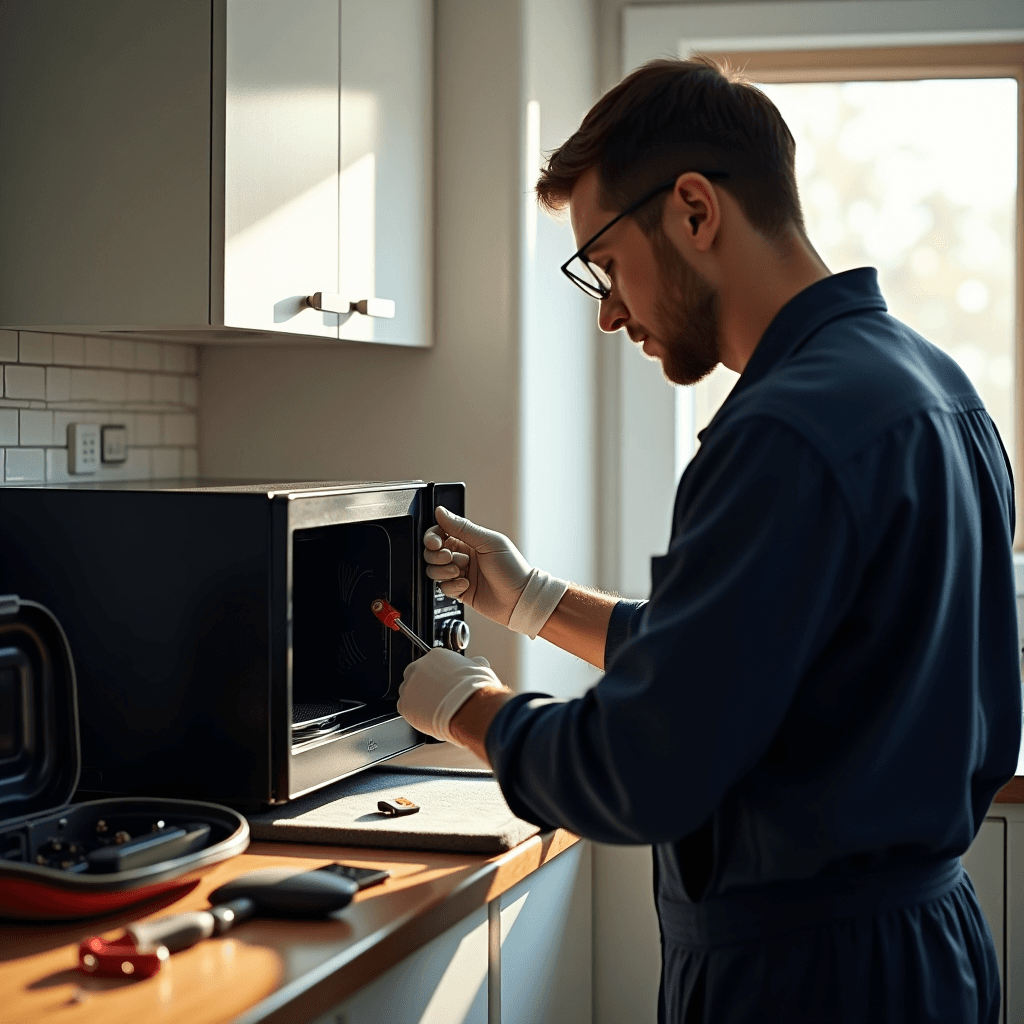
When a professional technician looks at a faulty microwave, they do more than just see if it switches on. A careful check in a compact kitchen will usually cover:
• Power supply and plug, to rule out simple connection issues
• Internal components that affect heating and turning
• Door seals and safety interlocks, to make sure the microwave only runs when it is shut properly
• Signs of overheating, burning or damage inside the cavity
Working in London homes, technicians get used to different layouts, from older properties with delicate wiring to new builds with tightly packed cabinets. Local appliance repair in London means shorter travel times and a good feel for how to work safely around fitted units and limited floor space.
Good engineers understand that your kitchen is small and busy. They aim to:
• Keep the work area clean and avoid spreading tools across every surface
• Plan the job so they do not need to dismantle more of your cabinets than necessary
• Work around your schedule as far as possible, since you might be working from home or juggling family meals
They can also share simple, safe tips to help your microwave last longer, such as:
• Keeping a small gap around vents so heat can escape
• Avoiding stacking boxes or jars tightly on top of the unit
• Using only microwave-safe cookware and covers
• Wiping up spills quickly to stop food from burning onto the interior
Take Action Now to Keep Your Small Kitchen Cooking
If your microwave feels a bit weaker than it used to, now is a good time to pay attention. Listen for new noises, watch for uneven heating and check the door and seals for any sign of damage. Think about how many of your meals rely on that one appliance, especially in a kitchen where there is no spare space for a second option. A quick professional safety check or repair visit can be far easier than dealing with a total failure in the middle of a busy week.
Putting things off can cause more trouble later. Small issues can grow into full breakdowns, leaving you without a working microwave and pushing you towards last-minute takeaway. That means more expense and more stress, all because an early warning sign was ignored. By spotting problems early, weighing up repair versus replacement and using local experts who understand small London kitchens, you can keep your compact space practical, safe and ready for everyday cooking.
Book Reliable Appliance Repairs With Minimal Disruption Today
If your cooker, fridge or washing machine is causing problems, we can help you get everything running smoothly again with prompt, professional appliance repair in London. At Alpha Appliances Ltd, our experienced engineers diagnose faults quickly so you can get back to your normal routine as soon as possible. Tell us what you need and we will arrange a convenient appointment that fits around your schedule. If you would like to talk through an issue first, simply contact us and we will be happy to advise.
Need a repair today?
Book a visit from a certified Alpha engineer in minutes.