
Tumble Dryer Repair: Common Faults & How to Fix Them
It's a wet Tuesday evening. You pull a load of washing from the drum and everything is still damp. Or worse, the drum isn't moving at all. When your tumble dryer gives up, it rarely chooses a convenient moment. Knowing what's gone wrong, and whether you need a professional tumble dryer repair or just a quick clean, can save you a wasted call-out and a bill you didn't need.
At Alpha Appliances Ltd, we've attended thousands of tumble dryer repair call-outs across London and the Home Counties since 2010, and the same handful of faults come up time and time again. Most of them follow predictable patterns, and once you understand the symptom-to-cause link, you're already ahead of the problem.
By the end of this article, you'll know what's most likely wrong with your machine, which checks you can safely run at home, what repairs cost in the UK right now, and how to find a qualified engineer you can actually trust.
The most common tumble dryer faults (and what's actually causing them)
Most dryer problems trace back to a small number of root causes. Understanding what's behind the symptom saves you time, money, and the frustration of replacing a part that wasn't the issue in the first place.
Dryer not heating or leaving clothes damp
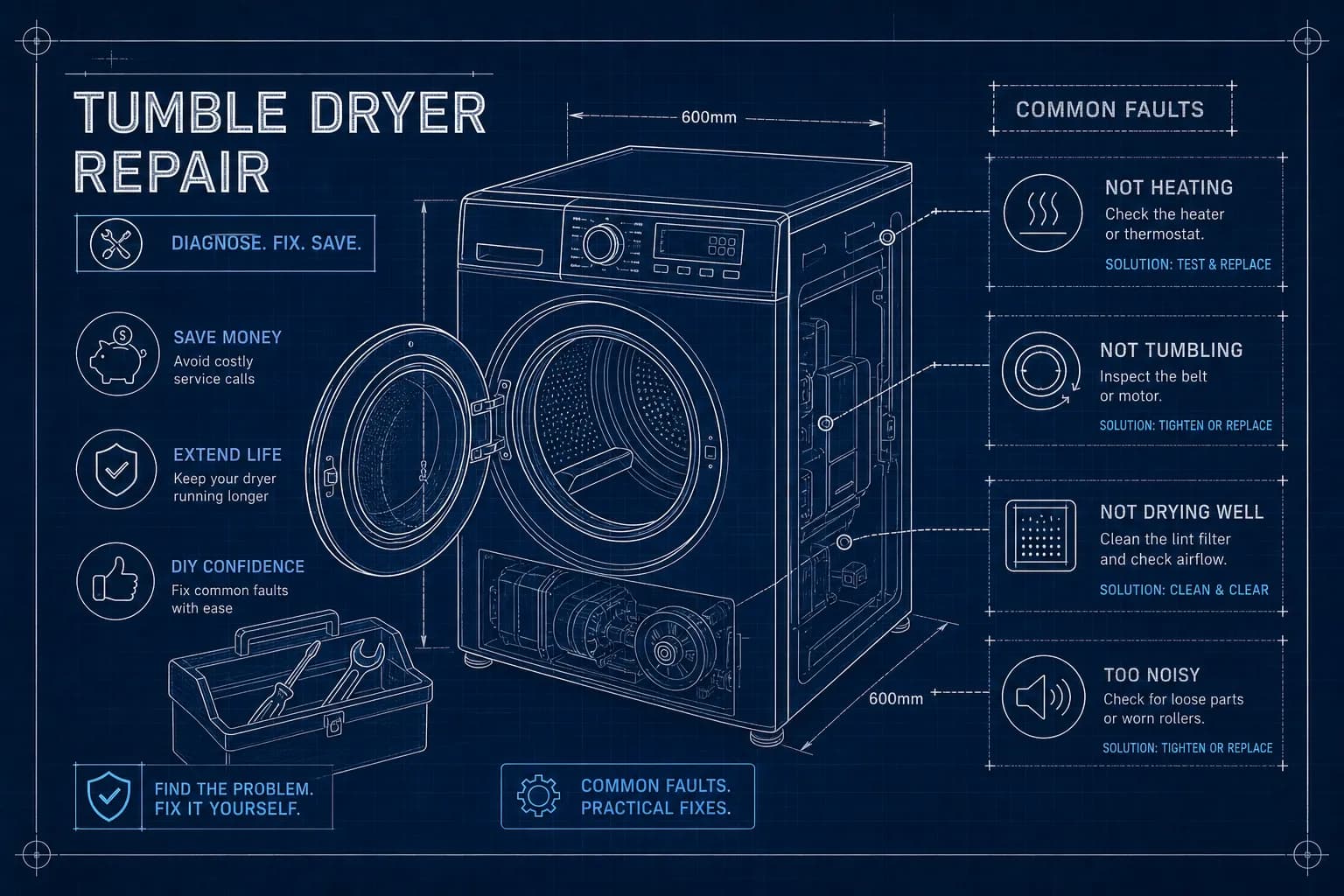
Blocked lint filters and vents are responsible for roughly 80% of heating complaints. When airflow is restricted, the thermal cut-out trips as a safety measure to prevent overheating, which is exactly why your clothes come out damp even though the drum was turning normally. If the filter is clean and the vent is clear, the next suspects are a failed heating element, a faulty thermostat, or a blown thermal fuse.
Condenser and heat pump dryer owners should also check the condenser unit itself. A full or clogged condenser restricts airflow just as effectively as a blocked vent, producing the same dryer-not-heating symptom. Heat pump dryer repair is generally more involved than fixing a standard vented machine, because the refrigerant circuit adds another layer of components that can fail independently of the heating element.
Drum not turning
If the drum is completely stationary, a broken drive belt is the most likely culprit. The belt physically connects the motor to the drum, and when it snaps, the motor runs but nothing moves. Secondary causes include motor failure, a faulty door switch that prevents the cycle from starting, or an overloaded drum that stalls the motor under the weight of the load.
Grinding, squealing, or water leaking
Loud mechanical noises typically point to worn drum rollers, failed rear bearings, or a fraying belt that's slipping rather than fully broken. These are gradual failures: the noise usually starts quietly and worsens over several weeks before the drum stops altogether. Leaking water, on the other hand, is almost always a condenser dryer issue. Condenser dryer repair for leaks usually involves a clogged condenser box that's overflowing, a damaged door seal, or a blocked drain hose. Left unaddressed, internal leaks can cause electrical damage that turns a straightforward repair into a much larger bill.
Safe checks to run before you call anyone out
There are several checks any homeowner can complete safely without opening the casing or touching internal wiring. These steps resolve a good number of faults and cost nothing. Work through them in order before booking a dryer repair service.
Power, plug, and door
Start with the basics: confirm the wall socket is live by testing it with a different appliance, then inspect the plug and cable for visible damage. Many dryers have a safety interlock that prevents the cycle from starting if the door switch isn't fully engaged, so push the door firmly closed and try again. Also check the back panel for a small red reset button, which resets the thermal cut-out after it has tripped and is frequently overlooked.
Lint filter, condenser, and vent
This is the single most impactful check you can make. Remove the lint filter from the door recess, wash it with warm soapy water and a soft brush, and leave it to dry completely before replacing it. For vented dryers, inspect the external vent hose for kinks or blockages. For condenser and heat pump models, remove the condenser unit from the lower access panel, flush it under a tap until the water runs clear, and allow it to air dry for at least 24 hours before refitting. Skipping this step is the leading cause of heat pump dryer repair calls that could have been avoided entirely.
Water tank and drain hose (condenser models)
Empty the water collection tank, usually located at the top of the machine, and check the valve at its base for any debris. If your dryer runs a continuous drain hose rather than a tank, disconnect the hose and flush it through to clear any blockage. These checks resolve the majority of mid-cycle shutdowns and leak complaints without any tools whatsoever.
When to stop DIYing and call a certified engineer
If the checks above don't resolve the fault, the problem is almost certainly internal. Continuing without the right tools and training at that point creates genuine risk, not just of injury, but of misdiagnosis and unnecessary parts costs.
Faults that need professional diagnosis
Book a qualified tumble dryer engineer if you're experiencing any of the following:
- Clothes still damp after a clean filter and a clear vent (likely a failed element, thermostat, or heat control switch)
- A drum that's completely stationary despite a closed door and a working socket (belt or motor failure)
- Persistent grinding after you've confirmed there are no foreign objects in the drum (worn bearings or rollers)
- Water pooling internally
Each of these requires the casing to be opened and components tested with specialist equipment.
Why internal testing isn't a safe DIY job
Heating elements, thermostats, and capacitors carry high-voltage current and can retain a residual charge even after the machine is unplugged. Safely testing them with a multimeter means disconnecting live circuits in the correct sequence, not something to approach without proper training. Beyond the safety risk, an incorrect diagnosis wastes money on parts that don't fix the fault. A qualified tumble dryer engineer carries calibrated diagnostic tools, knows the safety procedure for each brand and model, and can isolate the fault accurately on the first visit. That accuracy directly reduces the risk of an unnecessary parts bill and a second call-out fee.
What tumble dryer repair costs in the UK right now
Most standard tumble dryer repairs in the UK fall between £60 and £190 for common faults, with complex issues such as motor replacement reaching up to £300. Knowing the typical ranges before you book means you're in a position to spot an inflated quote immediately.
Cost breakdown by fault type
Drive belt replacement is the most affordable repair, typically coming in at £60 to £120 all in. Thermostat and thermal fuse replacements sit in a similar range at £40 to £110. A failed heating element, the most frequently replaced component, costs £60 to £190 depending on whether you have a vented, condenser, or heat pump machine. Water pump replacement runs £70 to £120. Motor failure is the most expensive repair at £120 to £300, which makes it worth weighing carefully against the cost of a new machine, particularly for older models.
Heat pump dryer repair costs follow the same ranges for common faults such as belts, thermostats, and motors. The significant cost difference only appears when the heat pump circuit itself fails, which can push the tumble dryer repair cost to £150 to £450 depending on whether the unit needs refrigerant work or a full pump replacement.
What affects the final price
Call-out fees range from £40 to £120 and are sometimes included within a fixed-price quote. Always ask upfront whether the call-out is separate or absorbed into the job price. London postcodes typically run £10 to £30 higher than areas outside the capital for the same repair, and the average total tumble dryer repair cost across the UK sits at roughly £150 for a standard fault. A reputable local appliance repair service should provide a confirmed, upfront price before any work begins, not an open-ended hourly estimate that climbs as the job progresses.
Repair or replace: how to make the right call
The core principle is straightforward: if the repair quote exceeds 50% of what a comparable new dryer costs, replacement is the smarter long-term investment. Applied consistently, this rule prevents you from throwing good money after bad on an ageing machine.
The 50% rule and the age threshold
If your dryer is under five years old and the repair is under 50% of replacement cost, repair is almost always the right choice. The maths shift once the machine is over eight to ten years old, especially for motor or bearing failures. Older machines tend to develop secondary faults within months of a major repair, meaning you end up paying twice within a short period. Two or more repairs within twelve months is a clear signal that replacement is overdue, regardless of the individual repair costs.
When an upgrade makes financial sense
Replacing an ageing vented dryer with a modern heat pump model can save £50 to £70 per year in running costs. Over five years, that offsets a meaningful chunk of the purchase price, making the switch financially sensible even if the existing machine could technically be repaired. If the model is subject to a manufacturer safety recall, replacement is non-negotiable regardless of repair cost. Also factor in parts availability: for dryers over ten years old, components are often obsolete, which means longer waits and higher prices even when a repair is technically possible.
Tumble dryer repair: how to find a reliable local engineer
Not all appliance engineers are equally qualified, and a cheap call-out fee is not a reliable indicator of quality. Knowing what to look for takes a few minutes and protects you from repeat visits, misdiagnosed faults, and inflated bills.
Certifications and questions worth asking
A trustworthy tumble dryer engineer should hold City & Guilds certification at minimum, which demonstrates they have completed formal, assessed training in domestic appliance repair. For any gas-related appliance work, Gas Safe registration is a legal requirement. Before confirming any booking, ask these questions directly:
- Is the quote fixed-price with no hidden fees?
- Are parts genuine, manufacturer-approved components?
- What warranty covers the repair?
- Do engineers carry common parts on the van, or will a second visit be needed?
A first-time fix rate above 75% is a reliable indicator of diagnostic quality. Engineers who stock common parts and diagnose accurately on the first visit save you money and time, as well as the inconvenience of a second appointment.
What a professional repair service looks like in practice
At Alpha Appliances Ltd, our manufacturer-trained engineers arrive with the most common parts stocked on the van, which is why we achieve a 78% first-time fix rate across all appliance types. Every tumble dryer repair comes with a transparent, confirmed quote before work begins, no surprises on the invoice. Whether it's a straightforward belt replacement, a condenser dryer repair, or a more complex heat pump fault, our City & Guilds certified team covers Greater London, Berkshire, Surrey, Hampshire, and Dorset, with next-day appointments available. Checking for those credentials and a confirmed fixed price is the most reliable way to find a local appliance repair service you can actually trust.
Tumble dryer repair: getting your dryer sorted without the stress
Tumble dryer repair doesn't have to be stressful or expensive once you understand what you're dealing with. Start with the safe DIY checks: clean the lint filter, clear the vent or condenser, and inspect the water system if you own a condenser model. If those steps don't resolve the fault, the problem is internal and needs a qualified engineer.
Keep the key decision points in mind: use the 50% rule to decide whether repair or replacement makes financial sense, ask for a confirmed quote before anyone starts work, and verify City & Guilds certification before you let an engineer into your home. Those three steps alone will protect you from the most common bad experiences people have with appliance repairs.
If your dryer isn't performing and you'd rather skip the guesswork, book a tumble dryer repair with Alpha Appliances Ltd online in under two minutes. Fixed price. Next-day availability. No hidden call-out fees.
Need a repair today?
Book a visit from a certified Alpha engineer in minutes.