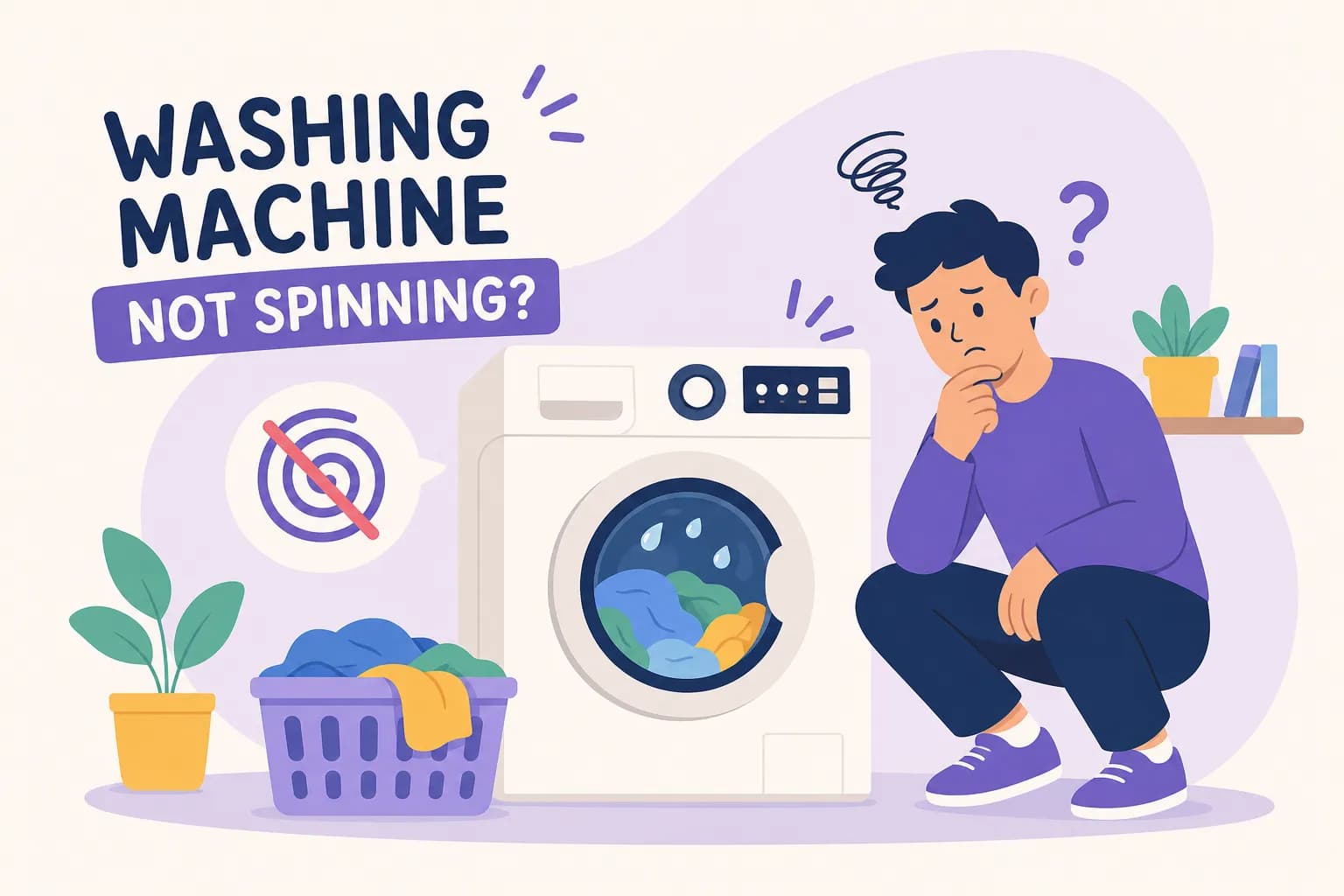
Washing machine not spinning? Learn 12 quick checks—from load balance and drainage to door locks, belts and suds, to fix common issues or know when to call a pro.
If your washing machine is not spinning, you are not alone, it is one of the most common appliance complaints we hear at Alpha Appliances Ltd. You load the machine, press start, walk away, and come back to find a drum full of sodden clothes sitting in cold water. No spin, no explanation, and possibly no useful error code. The good news is that the majority of causes follow a predictable pattern. Work through the right checks in the right order, and you will either fix the problem yourself in a matter of minutes or arrive at a clear picture of what needs professional attention.
The 12 checks below mirror the diagnostic sequence our City and Guilds certified engineers use on every first visit, a process refined through thousands of call-outs. Knowing them costs you nothing and saves time regardless of where the fault ends up sitting.
Before reaching for a screwdriver, take a moment to observe exactly what the machine is doing. The symptom pattern narrows the fault range considerably and saves you running through irrelevant checks.
There are two distinct diagnostic branches here. If the machine starts, runs through the wash phase, and then halts before or during spin, the most likely causes are an unbalanced load, a drainage blockage, or excess suds. If the drum never moves at all from the moment spin is expected, the fault usually sits with the door interlock, the drive belt, or the motor. Place yourself on the right branch first; it tells you which checks to prioritise.
Repair data consistently points to the same hierarchy. Unbalanced loads are the single most frequent cause, particularly with heavy items like towels, jeans, or duvets clumping to one side. Drain pump blockages come next, followed by door lock failures, worn drive belts, and finally motor or control board issues. That order matters because it reflects where your time is best spent first.
These three causes account for the majority of washing machine spin failures and require no tools to diagnose or fix. Many of these issues can be resolved quickly at home.
Cancel the current cycle, or pause it if the machine allows. If water is still sitting in the drum, run a drain-only cycle before opening the door. Once the drum is accessible, redistribute the items by placing them evenly around the drum wall rather than letting them bunch together. Mix heavy pieces with lighter ones, avoid washing a single bulky item like a bath mat on its own, and make sure the drum is no more than two-thirds full. Restart using the appropriate cycle: Bulky or Heavy Duty for large items rather than a standard cotton programme.
A drum packed too tightly prevents clothes from moving freely, which triggers the same imbalance safety stop as a clumped load. If the drum is crammed full, remove some items until the laundry can move freely, redistribute what remains, and restart. The machine needs space to tumble the laundry during spin, not just during the wash phase.
Modern machines detect excessive foam and halt the spin cycle automatically to allow it to dissipate. If the drum contains more bubbles than water, too much detergent is the likely cause, concentrated liquids in particular are easy to overdose. Run a rinse-and-spin cycle with no additional detergent. Once the cycle completes, reduce your detergent dose going forward and check that you are using the correct type for a high-efficiency machine.
A washing machine will not enter the spin phase if it cannot first drain the drum. This is a deliberate safety interlock, not a fault in itself. If your washing machine is not draining and not spinning, clearing a blocked pump filter is one of the most effective DIY repairs a homeowner can carry out.
Unplug the machine and lay old towels on the floor. On most UK front-load models, including Beko, Hotpoint, Samsung, and Indesit, the pump filter sits behind a small access flap on the bottom front of the machine. Follow these steps:
If you want a concise, illustrated guide to recognising and clearing a blocked pump filter, see this practical guide on how to check if your washing machine filter is blocked.
If the filter is clear but the machine still will not drain or spin, check the external drain hose at the rear of the machine. Look for kinks, tight bends, or a hose that has been pushed too far into the standpipe, which can create a siphon effect that prevents proper drainage. Follow your manufacturer's guidance on insertion depth, typically around 15 to 20 cm into the standpipe. A visual inspection takes two minutes and occasionally resolves the problem without any further disassembly.
A washing machine door lock fault is another common reason a washing machine is not spinning. If the machine powers on, fills, runs through the wash phase, but stops before spinning, and the door lock light is off or flashing, the door interlock is a strong candidate. A washing machine will not spin unless it receives a confirmed electrical signal that the door is securely closed.
Close the door firmly and listen for the audible click of the latch engaging. Check that nothing is caught in the door seal preventing full closure. A piece of fabric or a build-up of detergent residue around the seal is enough to prevent the lock from making proper contact with its striker.
Error codes narrow the fault down quickly. Common UK brand codes that indicate a door lock or spin cycle problem include:
Note that codes vary by model and year, so always cross-reference with your machine's manual. For manufacturer-specific code lists you can consult the Hotpoint washing machine error codes page or your appliance manual. If the code points to the door lock, bear in mind that the fault may lie in the status switch inside the assembly rather than the solenoid coil itself, even if the coil appears to test fine.
With the machine unplugged, disconnect the door lock connector from the control board and set a multimeter to resistance mode. Touch the leads to the solenoid coil terminals. On most standard UK models, a reading between 50 and 150 ohms indicates a working coil, though acceptable ranges vary by manufacturer, check your service manual for model-specific figures. An infinite resistance reading means the coil has failed and the assembly needs replacing. Door interlock assemblies are often inexpensive, typically tens of pounds for parts, and the assembly is straightforward to swap if you are confident working with electrical components.
If the drum spins freely when you turn it by hand but will not rotate during a cycle, the problem is almost certainly mechanical rather than electrical. This is a classic washer spin problem. The two most likely causes at this stage are a worn or broken drive belt and depleted carbon motor brushes.
Listen carefully during the spin phase. A loud squealing or rumbling noise at the start of spin, a smell of burning rubber after a cycle attempt, or complete silence from the motor when spin is expected all point to the belt. Accessing it requires removing the rear panel on most UK machines. A snapped belt will be obviously loose or missing entirely; a worn one may look glazed or cracked along its edges. Replacement belts typically cost £10 to £30 depending on the brand, but fitting requires confident access to the motor pulley and drum area.
Carbon brushes sit against the motor's commutator and wear down gradually over years of use, typically lasting seven to twelve years under normal household loads. When they are too short to maintain reliable contact, the motor loses torque and stops generating spin. Warning signs include a burning smell from the motor area, intermittent spinning that works sometimes and then fails, or a machine that only reaches low spin speeds. Carbon brushes cost £10 to £20 for a pair on most UK motor types, but fitting them involves accessing the motor housing and is more involved than a belt swap. For information on expected brush life and replacement timing, see this note on how long carbon brushes last. Note that many newer machines use inverter motors without brushes, so check your model before purchasing parts.
Running through checks one to ten will resolve the fault for many households. Some causes, however, including a failed control board, a seized motor, damaged drum bearings, or a persistent interlock fault that does not respond to part replacement, go beyond what most homeowners can safely manage without specialist diagnostic tools.
As a working guide, if the repair cost exceeds 50 to 60 per cent of the machine's current replacement value, a new purchase often makes more financial sense. Drum bearing replacements and control board faults are among the costlier repairs, board parts alone can run to £160 or more, with labour on top, and bearing jobs typically add further parts and labour costs. For machines under eight years old from a reputable brand, repair is generally worth pursuing. For machines over ten years old with a history of faults, the economics often point the other way. Your engineer will be able to give you a clear cost comparison before any work begins.
If your washing machine is still not spinning after working through these checks, or the repair involves motor wiring, control board components, or drum bearings, a certified engineer will diagnose the problem accurately on the first visit and carry out the repair with the correct parts. Alpha Appliances Ltd offers fixed-price, next-day washing machine repairs across London and the South of England, with City and Guilds certified engineers and no hidden call-out fees. If you have a Westin model or an AEG in Aldwych we also publish brand-specific guidance, see Fixing Westin Washing Machines in Aldwych Efficiently and Sorting AEG Washing Machine Issues Fast in Aldwych for details. A full service report is provided after every repair, which is particularly useful for landlords and letting agents who need documented evidence of maintenance. Booking takes a few minutes online with a confirmed appointment time.
The logical sequence matters here. Start with the simplest checks: load balance, detergent dose, and drainage. These cause the majority of washing machine spin failures and cost nothing to fix. Move on to the door lock and then the mechanical components only if the earlier checks come up empty. For extra troubleshooting suggestions and common fixes explained step-by-step, see this UK troubleshooting guide on what to do if your washing machine is not spinning.
Whether the answer turns out to be a clogged filter or a snapped drive belt, completing this list gives you a clear picture of what you are dealing with before committing to a repair or a replacement. If your washing machine is not spinning after all twelve checks, the right next step is a certified engineer, and arriving at that call with ten checks already completed saves diagnostic time and reduces the overall cost of the visit. Book a repair with Alpha Appliances Ltd today.
Book a visit from a certified Alpha engineer in minutes.
TRUSTED BY HOMEOWNERS
Fast, reliable, and warranty-backed repairs for every major brand.
Discover more tips from Alpha engineers.