
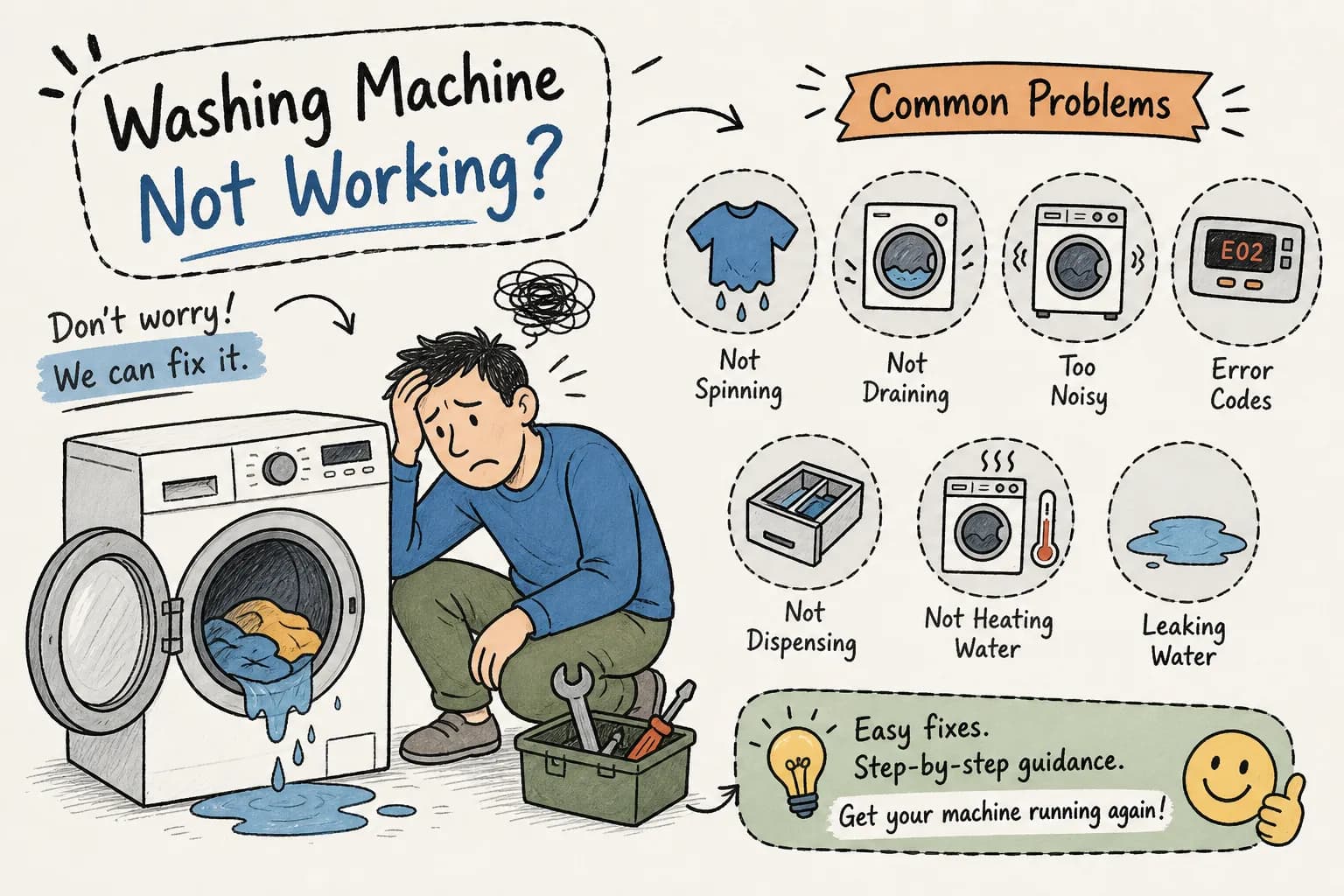
7 Common Washing Machine Problems and How to Repair Them
You pull open the washing machine door and find a drum full of cold, soaking wet clothes. The cycle finished 20 minutes ago, or at least you thought it did. Now there's a fault code blinking on the display, the drum is sitting in water, and you have no idea where to start. Sound familiar? Many
homeowners reach for the phone immediately or start browsing for a replacement machine. Neither response is usually necessary.
Most washing machine faults fall into one of seven categories, and several have a fix that takes under 20 minutes and costs nothing. The ones that don't are worth understanding too, because knowing what you're dealing with before you call an engineer saves you time, money, and the risk of being overcharged for a misdiagnosis. The team at Alpha Appliances Ltd has extensive hands-on experience diagnosing and repairing these exact faults across London and the South of England, and that knowledge informs every section of this guide.
Here's what you need to know: which faults you can sort yourself, which ones need a certified washing machine engineer, what washing machine repair costs in 2026, and how to find someone worth letting through your front door.
Washing machine repair: faults you can usually sort yourself
Not every washing machine fault signals an expensive repair. Several of the most common problems have quick, simple fixes that require no tools and no technical knowledge. If your machine has stopped working, start here before reaching for the phone.
1. The drum won't spin
The most likely cause is an unbalanced or overloaded drum. Modern machines have safety sensors that refuse to spin if the load is lopsided, typically because of a single heavy item like a duvet or a batch of towels tangled together. Open the door, redistribute the load so weight is spread evenly around the drum, and run a spin-only cycle. This takes five to ten minutes and resolves the problem more often than you'd expect.
If the drum still won't spin after redistributing the load, worn carbon brushes are the next most likely culprit. You can check whether the motor is trying to engage by listening for any hum during the spin cycle. If there's nothing, no sound, no movement, the brushes have probably worn down. At that point, DIY ends: brush replacement requires internal access to the motor, and that's a job for a trained engineer.
2. Water isn't draining
A blocked pump filter is the cause of roughly 60% of drainage problems, and it's entirely fixable at home. The filter sits behind a small access panel on the bottom front of most machines, the exact location varies by model, so check your manual if you're unsure. Before you open it, unplug the machine and place a shallow tray underneath; there will be residual water in the drum. Open the filter slowly, let the water drain into the tray, then pull out the filter and rinse it under a tap. Coins, hair, and small items of clothing are the usual culprits.
Also check the drain hose at the back of the machine. If it's kinked, pressed against a wall at a sharp angle, or positioned too low, the machine won't drain properly regardless of how clean the filter is. If the filter is clear, the hose is correctly routed, and water is still sitting in the drum after a drain cycle, the drain pump motor has failed. That needs professional attention.
3. The door won't lock
Check the rubber door gasket first. Small items, particularly socks and face cloths, frequently get caught in the seal and prevent the door from closing fully. Clear anything from the gasket, push the door shut firmly until you hear the click, and try restarting. If the machine still won't register the door as locked, unplug it for 60 seconds, plug it back in, and try again. This clears a surprising number of transient interlock errors.
If the machine still won't start with the door clearly shut and locked, the door interlock switch itself has failed. It's a straightforward part for a professional to replace, typically costing £60 to £110 including parts and labour. It's worth fixing on any machine under ten years old.
4. Excessive vibration or loud banging
Redistribute the load first. If the banging starts immediately and stops when you rebalance the clothes, that's your answer. If the machine has recently been moved or installed, check for shipping bolts: these are the transit bolts fitted at the back to protect the drum during transport. They're easy to miss and cause severe vibration if left in. Remove them using a spanner and keep them somewhere safe in case you move the machine again.
Check that all four feet are making firm contact with the floor and that the machine is level. If the banging is a deep, rhythmic rumble during the spin cycle and the machine is more than five or six years old, you're likely dealing with failing drum bearings. That's a different problem entirely, and it's covered below.
Faults that need a certified engineer
Some washing machine faults look manageable on the surface but involve internal components where an untrained repair attempt can cause further damage or a genuine safety risk, for example, working near live electrical connections or mishandling pressurised water components. These three fall firmly into the category of calling a professional.
5. Water not heating
The symptoms are subtle at first: clothes come out of the machine cold, detergent doesn't dissolve properly, and cycles seem to complete without the water ever getting warm. A heating-related fault code may appear. The likely cause is a failed heating element or a faulty thermistor, the temperature sensor that tells the machine how hot the water is. Both are straightforward repairs for a trained engineer but involve safely accessing internal components.
The average repair cost sits between £70 and £120 including parts and labour (based on typical 2026 UK engineer rates for heating element and thermistor replacements). On any machine under eight years old, that's comfortably worth paying. The repair takes around 60 to 90 minutes and, done correctly, gives the machine several more years of reliable service.
6. Rumbling or grinding during the spin cycle
Drum bearing failure sounds like a jet engine during the spin cycle. It starts as a low rumble and gets progressively louder over weeks if it's not addressed. The longer it's left, the more damage spreads to adjacent components. If you're hearing this on a machine that's more than five years old, get it diagnosed before the next wash cycle.
Bearing replacement is one of the most labour-intensive appliance repairs: the machine has to be largely dismantled, the outer tub split into two halves, the old bearings extracted and new ones pressed in. A professional engineer typically takes three to five hours to complete the job, depending on the model. Costs range from £120 to £200. On a machine under seven years old, it's generally worth it. On a machine aged eight years or more, the repair cost approaches replacement territory, and the decision needs careful consideration, see the final section of this guide.
7. Persistent or unexplained fault codes
Many fault codes clear after a 60-second power cycle and never return. Those aren't faults worth worrying about. What you need to watch for are codes that return immediately on restart or that reappear within the same cycle: particularly those pointing to the control board (PCB), the motor, or the pressure sensor. These indicate a component failure, not a temporary glitch.
Control board replacements typically cost £150 to £250 and are not worth attempting without proper diagnostics first. A certified engineer will run a full diagnostic to confirm the root cause before ordering any parts, this prevents you spending around £200 on a new PCB when the actual fault is closer to a £30 pressure sensor. Guesswork is expensive in appliance repair.
Making sense of washing machine fault codes
Fault codes are the machine telling you what's wrong, but the language changes depending on the brand. Understanding what the most common codes mean across the main manufacturers cuts through a lot of confusion before you call anyone.
What the most common codes actually mean
Here are the main fault categories and their codes across common UK brands:
- E1 / IE / 4E / 4C: Water not filling correctly. Check the tap is fully open, the inlet hose isn't kinked, and the inlet filter screen isn't blocked.
- E2 / OE / F21 / 5E: Drainage fault. Start with the pump filter before assuming anything more serious.
- dE / F02 / E5: Door lock issue. Check the seal for debris and try a power cycle reset.
- UE / UB / DC: Unbalanced load. Pause the cycle, redistribute the clothes, and restart.
- tE / HE / E3: Temperature or heating fault. This one needs an engineer.
Samsung uses 4E and 5E; Bosch uses E17 and E18; Hotpoint often uses simple LED blink patterns rather than a code on a display. The underlying fault is frequently the same, but the code format is different, which is why searching a code without knowing your brand and model often leads you to the wrong fix.
When a reset fixes it and when it doesn't
The reset process is simple: unplug the machine, wait 60 seconds, plug it back in. If the code clears and doesn't return during the next cycle, the fault was a momentary sensor glitch and the machine is fine. If the code reappears within the same cycle or immediately on restart, a reset is not a fix: the underlying component has failed and the code will keep coming back until it's repaired.
Knowing this distinction saves you from chasing a fault that doesn't exist and helps you give an engineer a clear, accurate description of what the machine is doing before they arrive.
What washing machine repairs cost in the UK in 2026
These are the numbers you need to avoid being overcharged or caught off guard by a final invoice that doesn't match the verbal quote.
Call-out fees, labour and typical parts costs
A standard call-out or diagnostic fee runs from £60 to £100, rising to around £110 in London. This typically covers travel, diagnosis, and the first portion of labour. Hourly labour rates sit between £50 and £100, though most engineers charge a flat rate per job: £70 to £150 covers the majority of common repairs. Emergency or after-hours call-outs add £50 to £100 on top of standard rates, and London rates run 20 to 30% higher than the national average across the board.
For parts, simple components such as carbon brushes or a door interlock switch cost £10 to £40. Door seals and drain pumps sit in the £20 to £60 range. Control boards and motors run from £100 to £300. The average total repair across all common faults in 2026 is around £125, with a realistic range of £70 to £400 depending on what's failed and where you are in the country.
Which repairs are worth paying for
Use this as your anchor: if the repair costs more than 50% of the price of a comparable replacement machine, or the machine is over eight to ten years old, replacement usually makes more financial sense. Drain pump and door seal repairs are almost always worth doing on a machine under eight years old. Motor and control board replacements on machines over eight years old rarely are, especially on budget brands where other components are ageing at the same rate. A trustworthy engineer will tell you this before quoting, not after they've already ordered the parts.
When to call a washing machine repair engineer
The UK has no mandatory licensing for electrical appliance repair, which means the quality gap between engineers is wider than most homeowners realise. A credible engineer is straightforward to identify if you know what to ask for. If you're searching for washing machine repair near me, credentials and verified local reviews are the most reliable filter, not price alone.
Qualifications and credentials that actually matter
Ask specifically for City & Guilds 224, the recognised industry standard for electrical appliance repair. It's not self-declared: it represents formal, assessed technical training. For gas appliances, Gas Safe registration is a legal requirement and can be verified online or by texting the engineer's licence number to 85080. Safe Contractor approval signals professional accountability and health and safety compliance beyond basic technical skill. Any reputable engineer will also confirm they hold public liability insurance without hesitation.
For premium brands like Miele, Bosch, or AEG, manufacturer-authorised status matters too: it means the engineer has brand-specific training and access to genuine parts. Verified reviews on Google or Checkatrade add a useful layer of confidence, but credentials come first. An engineer with five hundred five-star reviews and no verifiable qualifications is still a risk.
Why first-time fix rate and next-day availability matter more than price
The real cost of a washing machine repair isn't just the invoice: it's also every day you spend without a working machine. A company with a strong first-time fix rate resolves the problem in a single visit rather than returning twice because the wrong part was ordered. That matters far more than saving £20 on the call-out fee.
Alpha Appliances Ltd offers next-day availability across Greater London, Berkshire, Surrey, Hampshire, and Dorset, subject to engineer availability in your area, with City & Guilds certified engineers and a fixed-price, no-hidden-fee model. Same-day washing machine repair slots are available for urgent faults where scheduling allows. The combination of manufacturer-authorised status, verified credentials, and transparent pricing is the benchmark worth using when comparing any provider. Book your washing machine repair online and get a confirmed appointment in minutes.
Repair or replace: making the right call
Once you know what's wrong and what it will cost to fix, the final decision is straightforward if you apply the right framework.
The age and repair-cost rule
Divide the repair cost by the machine's remaining useful life. Assuming a 10 to 12-year lifespan, a £150 drum bearing replacement on a four-year-old machine is a clear decision: fix it. You're buying six to eight more years of reliable use. The same repair on a nine-year-old machine is a harder call, particularly if the machine has already had other components repaired and is running on borrowed time.
As a general rule: repair costs under £150 are worth paying on machines under eight years old; costs over £200 need careful thought on any machine over eight years old; and once a machine is past ten years with a fault in the motor or control board, replacement almost always wins on financial grounds.
Signs a replacement is the smarter move
These are the clearest indicators that repair isn't worth it:
- The machine is over ten years old and has had previous repairs.
- The fault is in the control board or motor and the machine is out of warranty.
- Water damage has affected internal wiring.
- Multiple faults are appearing at the same time.
A trustworthy engineer will give you an honest assessment before quoting, not a repair recommendation regardless of the machine's condition. If the first thing you hear is a confident quote before any diagnostics have been run, that's a signal worth taking seriously.
The short version
Most washing machine faults belong to one of seven categories. Four of them, unbalanced loads, blocked filters, door seal debris, and transit bolt issues, have straightforward DIY fixes that take less than 20 minutes. The other three (a failed heating element, worn drum bearings, and a faulty control board) need a certified engineer with the right tools and qualifications. Knowing the difference before you call anyone puts you in a far stronger position.
If your machine is beyond a basic reset or pump filter clean, the next step is booking a washing machine repair with a fixed-price quote, verified credentials, and a genuine first-time fix rate. Alpha Appliances Ltd covers all the major fault types across London and the South of England, with next-day availability and no hidden fees. Book your washing machine repair online, confirm an appointment in minutes and have a City & Guilds certified engineer at your door without the uncertainty that makes appliance breakdowns so disruptive.
Need a repair today?
Book a visit from a certified Alpha engineer in minutes.