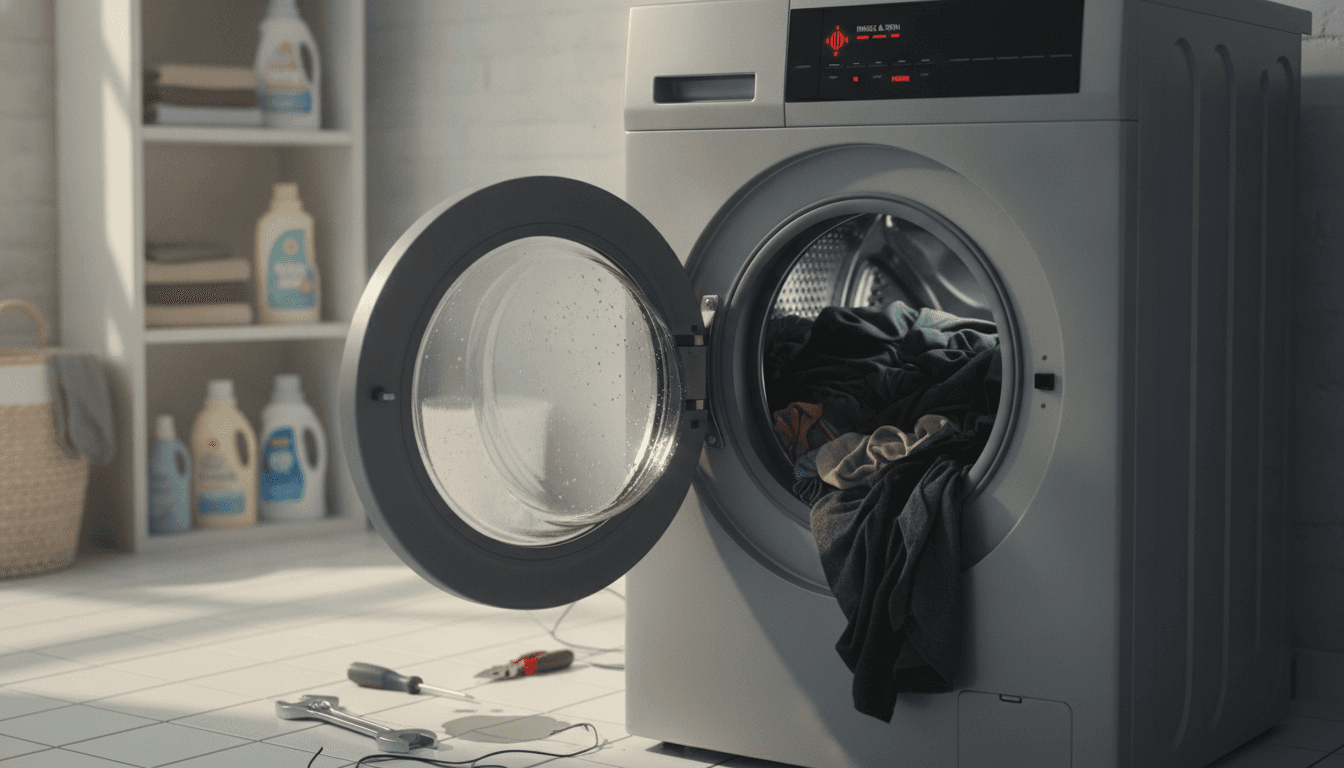
Facing washing machine not rinse and spin issues? We offer professional, reliable repairs with convenient online booking across London and the home counties.
Ever wondered why your laundry stops mid-cycle? Clothes stay wet, and your day is ruined. It's a common problem that messes up your routine.
Our team offers professional appliance repair in London, the home counties, and the south coast. We fix these issues quickly and accurately. Our aim is to make your life easier by fixing your appliance fast.
We value clear communication and top-notch work. Our engineers treat your appliances with care. Let us help you get back to your day without any more hassle.
Expert diagnostics for all major household appliance faults.
Reliable support available across London and the south coast.
Commitment to transparent pricing and high-quality service standards.
Fast turnaround times to minimise disruption to your daily routine.
Professional engineers focused on long-term solutions for your peace of mind.
The rinse and spin cycle is the last step in washing clothes. It makes sure clothes are clean and ready for drying. When it works right, clothes come out fresh and dry.
But, it's really annoying when your washing machine not rinse and spin right. Knowing how important this cycle is helps keep your clothes and machine in good shape.
The rinse phase fills the machine with clean water to remove leftover detergent. This is essential for your skin and clothes' look. Without a good rinse, clothes can feel stiff or look dull.
The spin phase then removes as much water as it can. The machine spins the drum fast to pull water from the clothes. This makes drying time shorter.
When your washing machine not rinse and spin, it usually means a problem with the machine's sensors. These sensors check water levels and drum balance before spinning. If they fail, the machine stops to avoid damage.
Drainage issues are another common problem. If water can't leave the drum, the machine won't spin to prevent flooding. Spotting these problems early helps you figure out if you need to fix it yourself or call a pro.
Spotting when your machine is not working right is key to fixing it. Catching problems early can stop bigger issues that might need a new machine.
There are clear signs if your washer is not rinsing or spinning. If you see any of these, your washing machine not rinse and spin cycle might be broken:
Clothes stay wet and heavy after the cycle ends.
A mildewy smell keeps coming back in the drum.
You can't hear the spin cycle's high-pitched sound or feel its movement.
Water stays at the bottom of the drum after the cycle ends.
The machine shakes a lot or makes odd noises during the spin.
To see if your washer is really broken, compare its current actions to how it usually works. A good washer drains water well and spins fast to dry clothes.
If your washing machine not draining right, it might mean the pump or filter is blocked. When water can't leave, the spin cycle won't start for safety. For more on fixing this, check our guide on how to fix a washing machine that won't spin.
Noticing these changes helps you tell if it's just a blockage or a bigger electrical problem. Keep an eye on these signs to keep your laundry routine smooth and stress-free.
Finding out why your washing machine isn't working is key to fixing it. It's really annoying when your daily routine gets disrupted by a faulty machine. Usually, these problems come from simple mechanical issues or safety features that protect your appliance.
Overloading the drum is a common problem. Modern machines have sensors that check for weight imbalances. If the load is too heavy, the machine stops to avoid damaging the motor and suspension.
A blockage in the filter or drain hose is a common reason for a washing machine not draining. Lint, coins, and small items can build up over time. This stops water from leaving the drum, so the machine won't spin.
If your filter is clear but your washing machine is not spinning, the drain pump might be the problem. The pump pushes water out so the drum can spin fast. If it fails, the machine stays stuck, unable to finish the cycle.
Every manufacturer puts safety first, which is why the door lock is so important. If the sensor thinks the door isn't closed, the machine won't start or might stop mid-cycle. This safety feature can also cause a washing machine not filling water if the control board thinks the door is open.
Dealing with a broken washing machine can be really frustrating. That's why we've put together a guide to help you find common problems safely. By doing some washing machine troubleshooting at home, you can save time and avoid calling out a repair service. You might be able to fix your machine yourself without needing a professional.
Start by checking the outside of your machine. Look for any kinks or sharp bends in the drain hose. A blocked or pinched hose can stop water from draining properly. You can usually fix this by hand.
Make sure the machine is plugged in correctly and the water taps are fully open. Sometimes, just unplugging the unit for a few minutes can fix small electronic problems. These simple steps help keep your laundry routine running smoothly.
If your machine won't spin, it might be because of how you've loaded it. An uneven load can set off the imbalance sensor, stopping the drum from spinning fast. Try rearranging your clothes to make sure they're evenly spread out.
Also, keep an eye on the digital display for any washing machine error codes. These codes can tell you what's wrong with your machine. Check your user manual to understand them, as they often suggest simple fixes like cleaning a filter or making sure the door is closed.
If you keep getting the same washing machine error codes even after a reset, stop trying to run the machine. Forcing it to work when it shows a fault can damage it. It's best to write down the code so a professional can help if the problem doesn't go away.
Knowing when to stop DIY repairs can save you money and prevent damage. While simple tasks are okay, some signs mean you need a pro. We want you to choose the safest option for your home.
Some problems are more than just a blockage or loose wire. A burning smell from your machine is a big warning. It usually means the motor is overheating and could catch fire.
Look out for these signs too:
Frequent electrical trips or blown fuses when the cycle starts.
Loud, grinding noises that suggest internal bearing failure.
Visible smoke or sparks near the control panel.
Water leaking near electrical components.
The cost of washing machine repair is a big worry for many. Think about the cost of a repair versus buying a new one. A good repair can make your machine last longer, saving you money in the long run.
When deciding, consider these points:
Service Factor
Repair Benefit
Replacement Cost
Initial Expense
Lower upfront cost
High capital outlay
Longevity
Adds years of use
New warranty period
Environmental Impact
Reduces waste
Increases landfill waste
Our team offers transparent pricing to help you decide. We aim for reliable fixes that keep you safe and your appliance working well for years.
We think that looking after your machine stops problems before they start. By taking care of your washing machine maintenance regularly, you can make it last longer. This way, it will work well every day.
Keeping your machine clean is a simple yet highly effective way to avoid common faults. You should regularly check and clean the drain filter. This removes lint, coins, or small items that might block water flow.
Don't forget to clean the rubber door seal after each wash. Debris and moisture can build up here, causing bad smells or leaks. Regular washing machine maintenance keeps these parts clean and safe.
Stability is key for your appliance's long life. We suggest using a spirit level to make sure your machine is perfectly flat. A level machine stops the excessive vibration and "walking" during the spin cycle. This protects your floor and the machine's parts.
Also, watch your load sizes to avoid straining the motor and bearings. By following these washing machine maintenance tips, your home will run smoothly and reliably for years.
Many common washing machine problems can be fixed at home. Some issues need a professional, but many small problems are easy to solve. By being proactive, you might avoid calling a service for a washing machine not spinning.
A faulty or displaced lid switch often causes a machine to drain but not spin. This switch stops the drum from moving when the door is open. If it's not in the right place, the machine thinks the door is still open and won't start.
Also, check for blockages in the drain hose or filter. Debris can stop water from draining, which stops the machine from spinning. Always check your manual for washing machine error codes to find the problem quickly.
To safely check these issues, you'll need some basic tools. The right tools help you work efficiently and avoid damaging your machine. Here are some essentials to keep in your toolkit:
Screwdriver set (both Phillips and flat-head) for accessing panels.
Spirit level to ensure the machine is perfectly balanced on the floor.
Pliers for loosening stubborn hose clamps.
Torch to inspect dark corners of the drum or filter housing.
Always disconnect the appliance from power before starting. Safety is crucial when working with electricals. If you're unsure, it's best to stop and get professional help.
Issue
Potential Cause
Suggested DIY Action
Machine won't spin
Unbalanced load
Rearrange clothes evenly
Drainage failure
Clogged filter
Clean the pump filter
Error codes
Sensor fault
Reset via manual instructions
Excessive vibration
Uneven feet
Adjust with spirit level
If your washing machine isn't filling with water, the right parts are key. The quality of these parts will affect how long the fix lasts. It's crucial to pick the correct component for any washing machine repair.
Using low-quality or wrong parts can cause more problems. It might even lead to safety risks in your home.
Always buy parts from the manufacturer or approved sellers. This way, you get genuine parts made for your machine. Official support sites can help you find common issues before buying.
Here are some trusted places to find parts:
Official manufacturer websites for guaranteed authenticity.
Authorised local appliance parts retailers.
Certified service centres that stock genuine spares.
When fixing your machine, matching parts is crucial. Look for your machine's model number inside the door or on the back. Never guess the part size or type, as small mistakes can cause big problems.
Using the wrong part can lead to issues like a washing machine not filling water. Always check the part number against the manufacturer's diagrams. This ensures your washing machine repair works well for a long time.
A reliable appliance is key in a busy UK home. Taking proactive steps keeps your laundry routine efficient and stress-free for years.
Regular washing machine maintenance stops small problems from becoming big, costly repairs. Simple habits like checking filters and balancing loads help your machine last longer.
You now know how to spot common problems like a washing machine not draining or failing to spin. Quick action saves time and helps you decide if a DIY fix is enough or if you need expert help. We're here to assist with professional repairs in London and the surrounding areas for any complex issues.
We want to empower you to manage your household appliances with confidence. Regular checks ensure your laundry cycles run perfectly and extend your machine's lifespan. Contact our team for dependable service that puts your needs first.
An unbalanced load or drainage issues often cause this. If the water can't escape, the machine won't spin fast. Check for blockages in the pump filter.
Make sure the taps are fully open and the hoses aren't kinked. Limescale or sediment in the water inlet valve can also block the flow.
Check your user manual or the manufacturer's website for specific codes. Samsung, Bosch, and LG have detailed explanations for their error codes.
Yes, often. Repairing a high-quality brand like Miele or Siemens is cost-effective and eco-friendly compared to buying new.
Service washes monthly and clean the drain filter every three to six months. This prevents common problems.
Book a visit from a certified Alpha engineer in minutes.
TRUSTED BY HOMEOWNERS
Fast, reliable, and warranty-backed repairs for every major brand.
Discover more tips from Alpha engineers.