
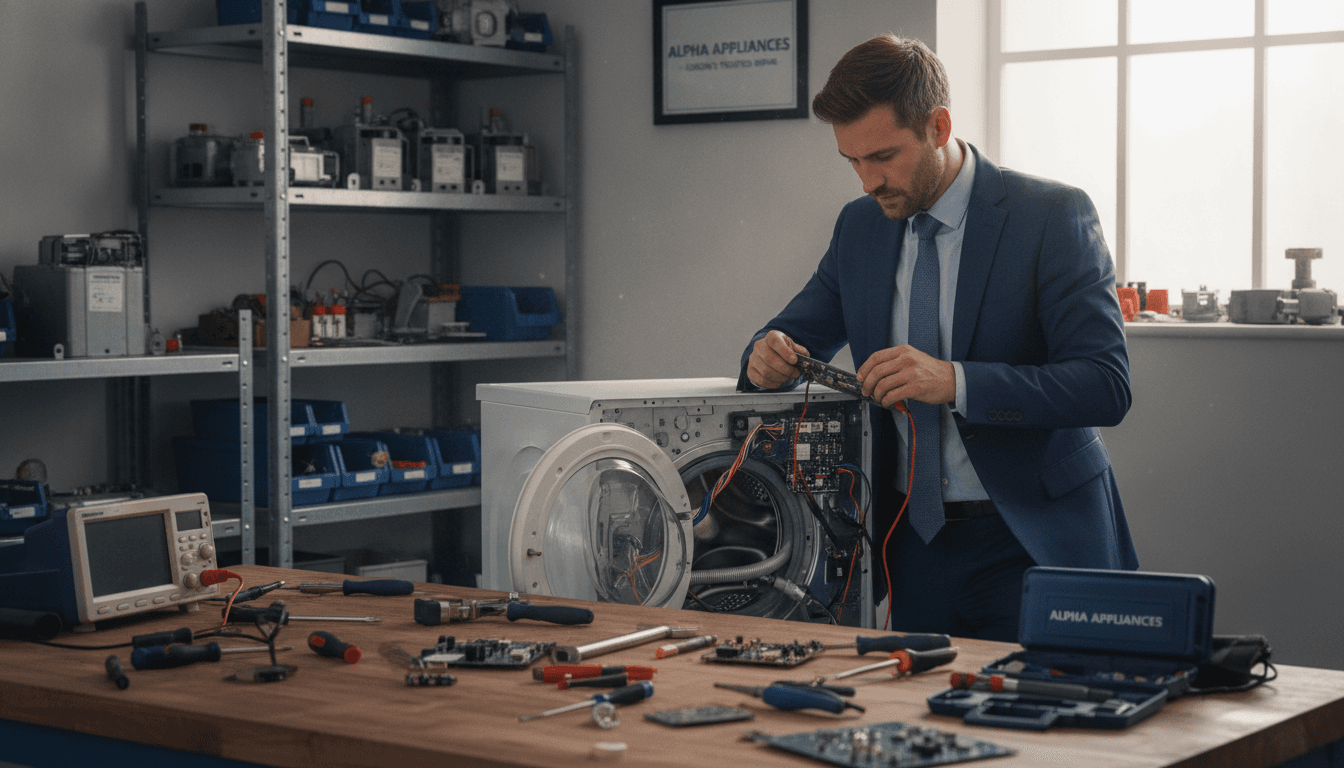
What are the most common washing machine faults repaired by London engineers?
Did you know that nearly 70% of household appliance breakdowns happen because of simple blockages or minor electrical issues? When your laundry stops working, it can be really frustrating. But, you might not need a new appliance to fix it.
We help many homeowners with problems like drainage failures, leaks, and issues with the spin cycle. Rest assured, if your appliance is under ten years old, fixing it is often the best and most cost-effective choice. Our team offers clear diagnostics and pricing to ensure top-notch service every time.
When you book your appointment, please tell us about the exact problems you're facing. This lets our experts get the right parts ready for when they come to your place. We're all about reliable workmanship and making booking easy for you.
Key Takeaways
Most appliance issues stem from minor blockages that are easily rectified.
Repairing units under ten years old remains a highly sensible financial decision.
Providing specific symptoms during booking helps us prioritise your repair.
We offer transparent pricing to ensure complete peace of mind.
Our professional team specialises in restoring your home appliances to full working order.
Overview of Washing Machine Faults
Many homeowners face similar washing machine faults in London. These range from small drainage problems to big control panel errors. These machines are key to our daily lives. When they break down, it really disrupts our routines.
Most problems happen at certain times, like when taking in water, washing, rinsing, draining, or spinning. Spotting when the machine fails helps pinpoint the issue. Our team offers top-notch help for all major brands in London, whether you have a freestanding or integrated model.
It's easier to understand common washing machine problems by their signs, not technical terms. For example, if your machine won't spin, it might have a broken motor, a worn belt, or a blockage. Because one sign can mean many things, getting a pro to check it is best.
While you can do simple checks, like making sure the door is shut or the filter is clean, complex fixes need specialised tools and skills. We're here to offer that reliable help, getting your machine fixed fast. Relying on a pro engineer prevents more damage and keeps your machine running well for years.
Electrical Issues in Washing Machines
Electrical failures in washing machines can be really frustrating. If your machine won't start or stops mid-cycle, these common washing machine problems need expert help to fix safely.
Your safety is our top concern. While you can check the plug and socket, don't try to open the machine or touch the electrical parts yourself.
Common Electrical Faults
Electrical issues often come from worn-out parts inside the machine. The heating element is a common problem. It can cause the machine to trip your home’s RCD or fuse if it has a short circuit.
Wiring or cable damage is another big risk. It can lead to power loss. Also, faulty temperature sensors or a broken control board can stop the machine from finishing its cycle, leaving your clothes wet.
Symptom
Potential Cause
Recommended Action
Machine trips power
Short circuit in element
Professional testing
No power at all
Blown fuse or cable
Check plug/fuse
Stops mid-cycle
Control board fault
Diagnostic service
Erratic behaviour
Sensor malfunction
Component replacement
How Engineers Diagnose Electrical Problems
Our engineers follow a detailed process to find the problem. They use special tools to test parts and find the faulty one.
After finding the issue, we explain what repairs are needed clearly. We want you to understand what's being fixed and why.
After fixing the machine, we do thorough safety checks. We make sure it's safe for your home. We also test it fully to make sure the common washing machine problems are fixed before we leave.
Drainage and Pumping Problems
It's really stressful when your washing machine doesn't pump out water right. These common washing machine problems can mess up your whole day. But spotting the signs early can make fixing it easier.
Symptoms of Drainage Issues
Water left in the drum after a cycle is a clear sign of trouble. Clothes that feel damp or heavy also point to a problem. This means the final spin didn't work as it should. Some machines show error codes on the control panel for blockages. The door might stay locked too, as a safety feature to stop water flooding your kitchen.
Common Repairs for Pumping Faults
If your washing machine won't drain, it's often because of something stuck. Things like lint, coins, or hairpins can block the filter or drain pump.
First, turn off the machine and check the filter. Regular cleaning of this filter helps avoid problems and keeps your machine working well. But, if the blockage is deep or the pump motor has failed, you need a pro. Our engineers can clear blockages, replace faulty pumps, and get your machine working at peak performance again.
Drum Issues and Inconsistencies
Strange sounds in your laundry routine often point to drum problems. The drum assembly needs precise alignment for every cycle. This ensures it works right. Notice your machine acting strangely? It might be due to wear or stress on internal parts. Ignoring these signs can cause bigger damage later.
Unusual Noises From the Drum
Unusual sounds like banging, grinding, or squeaking mean something's wrong. These noises usually come from objects stuck between the drum and outer tub, like coins or bra wires. Worn-out bearings, a damaged drum spider, or a frayed drive belt are serious issues. If you hear grinding, stop the machine right away. This prevents damage to the motor or drum housing.
Reasons for Drum Imbalance
Drum imbalance can also be due to physics and load distribution. Overloading stops clothes from moving freely, causing vibration in the spin cycle. An uneven floor can make your machine wobble, leading to instability. Always check the machine's level and try to even out the load if it's off-balance. If vibration doesn't go away, it's time to call a pro. Fixing these issues early keeps your machine reliable and efficient for years.
Door and Lid Malfunctions
Your washing machine door is key for safety and working well. Door and lid problems are common washing machine faults UK homes face. These issues can stop your machine from starting or let water leak during a cycle.
Common Door Faults
A door that won't close right is a common problem. It often comes from a latch that's off or a broken hinge. If your machine won't start, it might be because the safety interlock isn't working. Never try to bypass this lock, as it's a critical safety feature to stop water damage.
Another issue is when the door stays locked after a cycle. This usually means the door-lock mechanism or drainage is faulty. Water leaking around the door can mean the rubber seal is damaged or blocked. For more info, check our top 15 signs your washing machine needs a pro.
Repairing Lid Issues
Check the door seal regularly for mould, tears, or trapped items. If it's worn, fix it early to avoid more damage. Don't force a locked door open, as it can break the handle or damage the lock.
Fixing these washing machine faults UK owners face is what we do. We do a full check, replace parts, and test the machine to make sure it's safe and works well. We're committed to keeping your home running smoothly.
Symptom
Potential Cause
Recommended Action
Door won't latch
Misaligned hinge or latch
Check for debris or damage
Machine won't start
Faulty door interlock
Professional diagnostic required
Leaking at seal
Torn or dirty rubber gasket
Clean or replace the seal
Door stays locked
Control board or lock failure
Manual release or repair
Sensor and Control Panel Failures
When your appliance stops responding, it's often due to sensor or control panel problems. These parts are like the brain of your machine, controlling every wash cycle. Knowing about washing machine faults UK homeowners face is key to fixing them.
Symptoms of Control Panel Issues
Your machine might act strangely, like flashing lights or unresponsive buttons. The display could show error codes that don't go away after a restart. These signs usually mean a problem with the electronic control board or a communication issue.
Error codes differ by brand. Always check your user manual or the brand's guide to understand them. Unexplained programme changes or not starting a cycle are signs you need a pro.
Resolving Sensor Malfunctions
Internal sensors like pressure switches and temperature probes are critical. If they fail, your machine might not detect water levels or heat water correctly. Washing machine faults UK residents face are best fixed by experts who know these parts well.
Experts use special tools to check the control boards and water-level systems. We advise against trying to fix these parts yourself. Wrong installation can cause more harm. Getting an engineer who knows your brand ensures a safe and durable repair.
Symptom
Potential Cause
Recommended Action
Flashing LED lights
Control board error
Check manual for code
Incorrect water level
Pressure switch fault
Professional calibration
Unresponsive buttons
Interface board failure
Engineer inspection
Cycle stops mid-way
Temperature sensor issue
Component testing
Leakage and Flooding Situations
Finding water leaking from your washing machine can be scary. If you see water on the floor, stay safe first. Switch off the electrical power and turn off the water supply valve. Use towels to protect your floor while you figure out what to do next.
Spotting water leaks needs a careful eye. Water often flows along the machine's base before you see it on the floor. So, the puddle might be a few centimetres from where the leak is.
Identifying Water Leakage Sources
Look for leaks in common places. Check the door seal for damage or blockages. Also, inspect the hoses for wear, cracks, or loose connections.
Don't overlook the detergent drawer. Clogs here can cause water to spill over. The filter area at the machine's front is another common leak spot. Be thorough when checking under the appliance, as leaks from pumps or valves often show up there.
Common Repairs for Flooding
After finding the leak, we often replace parts to fix it. We replace damaged seals, hoses, or pumps to stop leaks. If the detergent drawer is cracked or clogged, we replace it or clean it out.
After repairs, we test the machine for leaks and safety. Our goal is to fix the problem, not just the symptoms. This way, we keep your laundry area safe and working well.
Cycle and Timer Problems
It's really frustrating when your washing machine stops working mid-cycle. This can happen for many reasons, and finding the cause is key. Washing machine troubleshooting London experts look closely to solve these issues.
Symptoms of Cycle Failures
Maybe your machine stops suddenly or gets stuck in one wash phase. It might even finish without draining the water. These problems show the machine's internal logic is off.
First, check if you've picked the right wash cycle. Don't overload the machine, as it can't balance properly. Seeing if the problem happens every time is important in our washing machine troubleshooting London work.
Troubleshooting Timer Issues
Timer problems are common, but they're often caused by other parts. Issues like drainage, heating, or a faulty door-lock can stop the cycle. If the machine gets too hot or leaves water, it's time to call for help.
When problems keep happening, we need to do more than just reset. Our team offers washing machine troubleshooting London services to find the real problem. We aim for reliable fixes that keep your machine working well for a long time.
Maintenance Tips to Prevent Faults
Preventing common appliance faults is easier with proactive care. Spending a little time each month on your machine can save you from sudden breakdowns and expensive fixes. Regular maintenance keeps your appliance efficient and reliable for many years.
Routine Checks for Longevity
Begin by keeping the door seal and detergent drawer clean. Build-up in these areas can cause mould and bad smells. Just wipe the seal after each wash and rinse the drawer to avoid blockages.
Check your hoses for wear or leaks too. Clearing the drain filter regularly is essential to avoid water retention and pumping problems. Also, make sure your machine is on a level floor to reduce vibration and bearing strain.
Be careful not to overload the drum. Too much in the drum can damage the motor and suspension, affecting cleaning. Using the right amount of detergent is also key to avoid damaging sensors and parts.
Importance of Professional Servicing
Even with good care, appliances can wear out. If you notice smells, sounds, or faults, it's time for a pro. Fixing small issues early can prevent big, costly problems.
Choose trusted washing machine repair services London homeowners can rely on. A skilled engineer can spot hidden problems not seen in routine checks. This helps keep your machine running well for longer.
Professional maintenance gives you peace of mind. Relying on expert washing machine repair services London ensures your appliances are cared for with precision. Keeping your machine in good shape is a smart move for your home and wallet.
When to Call a London Engineer
It's important to know when to ask for help with your home appliances. If you see leaks, electrical issues, or loud noises, it's time to call a professional. These problems can really disrupt your day.
Signs You Need Professional Help
Seeing the same error codes or if your machine stops mid-cycle, it's a sign of a bigger problem. If it won't drain or spin right, you need help fast. Our team offers top-notch London washing machine repairs to get your machine working again.
Choosing the Right Engineer for Repairs
Look for a technician who gives clear answers and fair prices. They should know how to fix your brand, like Bosch or LG. We promise our London washing machine repair services come with a 12-month guarantee.
We serve all of London, with quick appointments. Knowing the common washing machine problems in London helps you choose the right service. Tell us about your appliance and its issues. We're here to help fix any washing machine problems in London homes.
FAQ
What are the most common washing machine faults London engineers encounter?
London engineers often fix drainage blockages, failed door interlocks, and worn drum bearings. They also deal with electrical faults like a failed heating element. Brands like Bosch and Hotpoint are common.
Why is my washing machine leaking from the bottom?
Leaks from the bottom are common. They can be due to a split door seal, a blocked detergent drawer, or a leaking hose. It's best to get a professional to find the source to avoid floor damage.
How can I identify specific washing machine faults UK models display?
UK models show error codes like E18 on Bosch or F05 on Indesit. Check your manual for these codes. But remember, one code can mean different things. Our engineers use these codes to start their diagnosis.
Are washing machine repair services London based worth it for an older machine?
If your machine is under 10 years old and from a good brand like Miele or Samsung, repair is often cheaper. We offer clear prices so you can decide if it's worth it compared to buying new.
My washing machine is making a loud banging noise during the spin cycle; what should I do?
Stop the machine and check if it's level. If it's balanced but the noise continues, it might be drum bearings or suspension. This could damage your machine, so it's a sign you need repairs.
Can I fix a drainage fault myself?
You can safely clean the pump filter at the front of the machine. But if the filter is clear and it won't drain, the problem is deeper. You'll need an engineer for that.
Need a repair today?
Book a visit from a certified Alpha engineer in minutes.